











Foam Reports for Duty
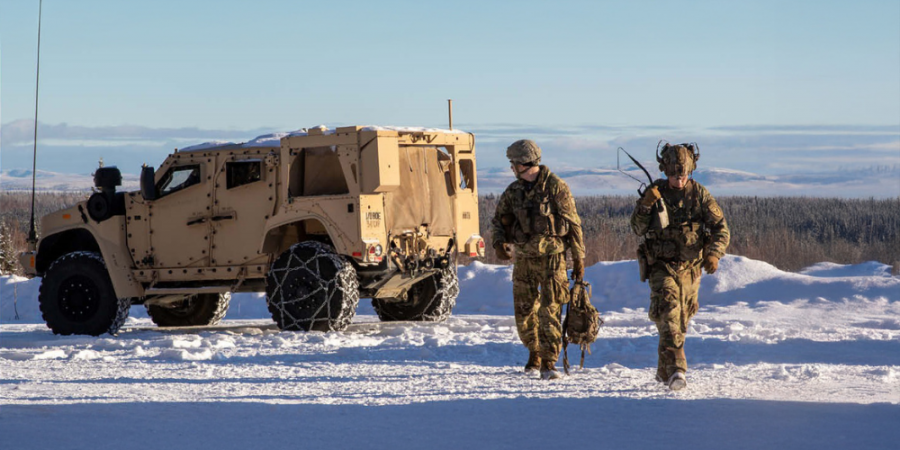

Spray Foam Magazine – February 2025 – Spray Foam Magazine interviewed an SPF contractor who completed a significant remodel of one of the oldest dorms on a military base. The spray foam team bravely faced 75 inches of snowfall and temperatures plummeting to -40°F, yet they achieved outstanding results. North Pole, Alaska, is situated in the Fairbanks North Star Borough, adjacent to Fort Wainwright, one of the largest army bases in the United States, spanning an impressive 1.6 million acres.
Located 190 miles south of the Arctic Circle, this base endures a subarctic climate characterized by extreme temperatures. During winter, records show temperatures can drop as low as -66°F (-54.44°C), with January averaging lows of -17°F (-27°C). In stark contrast, summer highs average 73°F (22°C), while annual precipitation includes about 12 inches (305 mm) of rain and 37 inches (94 cm) of snow.
Fort Wainwright employs roughly 15,000 military personnel, many housed in dormitories. Alaska Insulation and Coatings Specialists, LLC made its mark in 2022, but the expertise behind it has been forged over years of dedication. Owner Jordan Schuster joined his father, Jim Schuster, who has been making waves in the insulation field for forty years.
Jim had made the bold move to Fairbanks in 1977, hitchhiking from northwest Ohio to visit his brother attending a local university. Choosing to settle in Alaska, he seized the opportunity to insulate attics and quickly found himself managing an insulation business after the original owner disappeared without warning.
Jordan worked with his father from 2015, but in 2022 he decided it was his turn to start his own business. Nevertheless, Jim still loves to drop in from time to time to help Jordan spray. Today, Alaska Insulation and Coatings Specialists stands as the only full-service insulation contractor in Alaska, delivering top-tier services like spray foam, coatings, vapor barriers, fiberglass batt insulation, blown-in insulation, mechanical insulation, and more.
How did this ambitious project come to fruition? A contractor Jordan previously collaborated with reached out last summer, identifying a significant issue on a job. After an in-depth discussion about insulation solutions, it was clear that closed-cell foam was the clear choice for the exterior walls.
These dorms were seriously plagued by moisture problems. The initial plan was for the general contractor to strip everything down to the existing block structure and install four inches of foam panels on the exterior of the concrete block wall, along with fiberglass batts on the exterior walls.
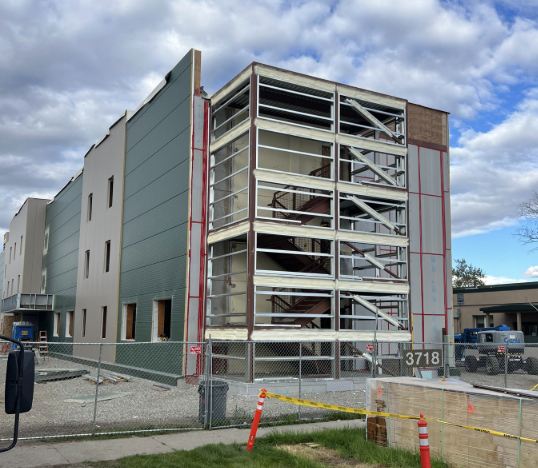
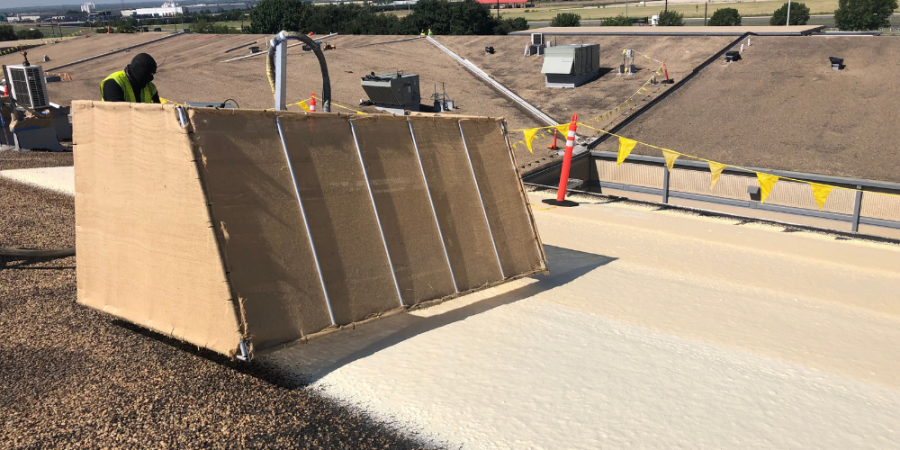
During the foaming process, HCS used a plastic-covered lift to install the foam up and down the school’s exterior.
However, when the general contractor recognized the necessity of an air barrier and the moisture issues that fiberglass batts would pose on concrete blocks, they immediately turned to Alaska Insulation and Coatings Specialists. Jordan and his crew stepped up to the challenge, collaborating closely with the general contractor and the Army Corps of Engineers to redesign the building, which they planned to incorporate two inches of closed-cell foam on the exterior walls and four inches in the stair tower walls, capped with an intumescent coating.
The crew arrived on site, geared up in their full PPE ready to get to work. Despite the presence of plumbing, electrical systems, and fire suppression already installed, they dedicated considerable man-hours to critical tasks like masking, creating exclusion zones with a zip wall, and establishing pressure systems to allow other trades to continue their work seamlessly while they executed their tasks.
This preparation was rigorous, necessitating three to four trips before any spraying of the exterior walls began, especially in those areas that would become inaccessible post-installation, including behind beams and corners before air handlers were fitted.
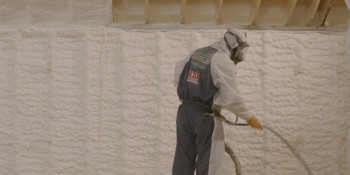
Finally, the crew returned to spray the foam. With a total wall square footage of approximately 25,000 square feet across three floors and four additional stories in the stair towers that led to the roof, the task was formidable.
When they officially began their work in November, the sub-zero conditions presented significant challenges for spraying operations. Therefore, each step of the process was meticulously planned and executed. Starting on the third floor, the crew connected their hose to a telescoping boom and maneuvered it through a window, which meant at least 50 feet of hose remained exposed to temperatures as low as -30°F. To combat this, they innovatively wrapped the hose in insulation batts while meticulously plotting the shortest possible route for efficiency.
In Fort Wainwright, the buildings are heated with steam from a local power plant, and there were temporary steam heaters setup on the first floor of the dorm. Given the extreme temperatures, conducting daily moisture and temperature tests on the block was non-negotiable before applying any foam.
The crew needed a consistent heat source, so they utilized drum blankets and wrapped hoses and heaters in the truck to ensure their materials remained warm. Thanks to proper precautions and rigorous testing, they effectively pushed the boundaries of their manufacturer’s guidelines, receiving invaluable support from their manufacturers every step of the way.
The crew skillfully worked down three stories, using their H-40 proportioner to spray the exterior walls with two inches of UPC 2.0 closed-cell foam. In the stair towers, the crew boomed up close to 70ft, and used a harness with lanyard suspension packs. They then applied four inches of foam to the exterior walls, finishing off with an intumescent coating.
The stair towers required the additional two inches of foam because the wall panel wasn’t as thick as on the dorm exterior walls. They were a completely new addition to the building and to get it to line up with the existing concrete block they couldn’t use as thick foam panels. In addition to this, they were framed red iron, and the building exterior walls were concrete block/steel studs.
This project spanned a couple of months, during which the crew faced the toughest winter conditions, including heavy snow and temperatures plummeting to -40 degrees. “I couldn’t be prouder of my crew. Their positive attitude and determination to overcome harsh conditions and spray quality foam were exemplary,” stated Jordan. Our team ensured that daily adhesion pull tests and density tests were conducted, along with extensive hours dedicated to masking, spraying, painting, and cleanup.”
Jordan emphasized that the completion of this project would not have been possible without the exceptional guidance from our manufacturer, UPC. “Whenever I needed insight, Hunter Melvin, a spray foam tech for UPC was my go-to. Jim Fleming who works for Design North Supply, our foam supplier, was equally essential. He’s been in the industry for 40 years selling and spraying foam in Alaska, so his expertise was invaluable.”
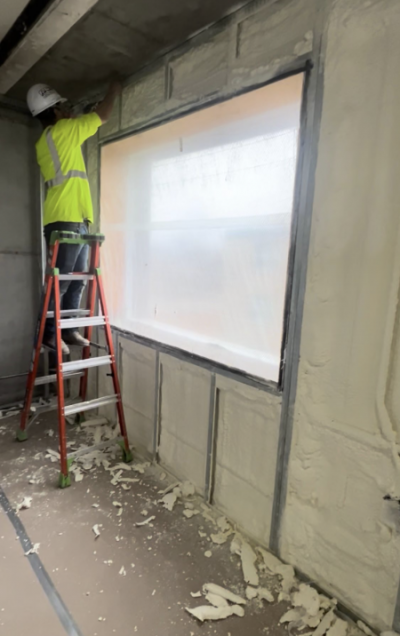
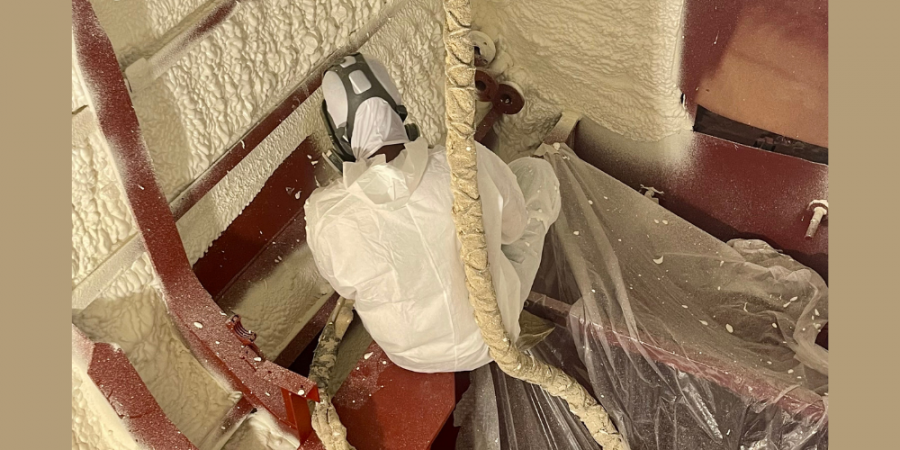
A lofty view of some of the high ceilings inside the school. As pictured, most of the ceilings got six inches of InsulStar 1.7 lb closed-cell foam. Other void spaces, like certain parts of the attic, got one inch of foam and blown-in insulation for the rest–a cost-effective solution given the sheer size of the building.
Reflecting on the challenges, Jordan stated, “This was undoubtedly one of the most demanding jobs I have undertaken. The walls were filled with large bolts used to repair cracks in the block that required coverage, sticking out beyond the two-inch depth we were spraying. Additionally, we had to address metal conduits, range hoods, and tracks for tops, bottoms, and windows.
A wall that typically takes 30 minutes to spray now required double that time due to these complexities.”
Just last week, Jordan returned to the dorms to spray some exterior door frames. He may not be eager for winter's arrival, but he is confident that with the right team, we can tackle projects of this magnitude, even under the harshest conditions.
Tragically, a week before the project’s completion, Brad Peacock, the project manager for Bristol Building Contractors, passed away unexpectedly while enjoying the Alaskan outdoors. Jordan reflects on Brad and his family daily as he passes the project site. “His legacy and dedication enhanced our team, and I’m profoundly grateful to Bristol and Brad for that. I always remind my crew, ‘If you can’t do the little things right, they will never trust you to do the big things.’”
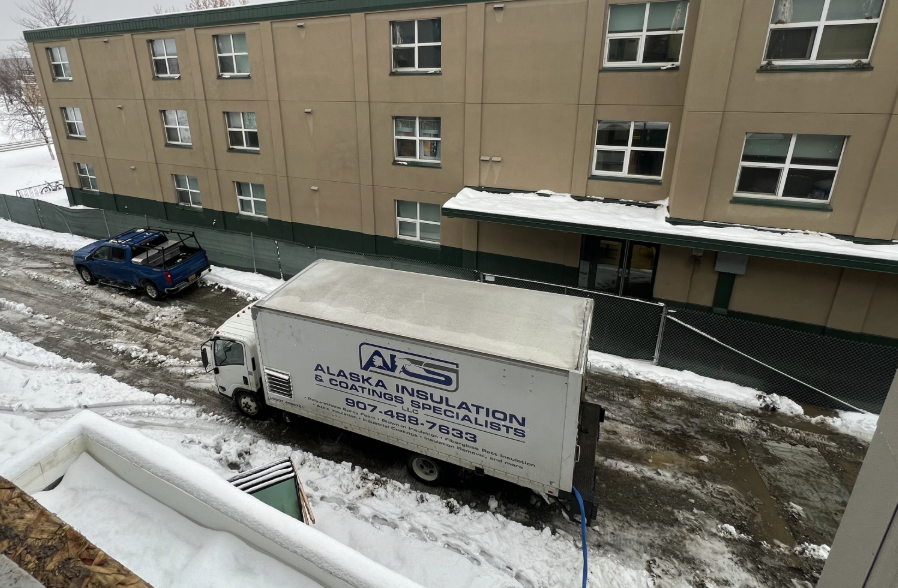
Alaska Insulation & Coatings Specialists worked closely with the GC and Army Corps of Engineers for a plan to fix the aging dorms moisture problems.
Disqus website name not provided.