










Building the Dream Shop
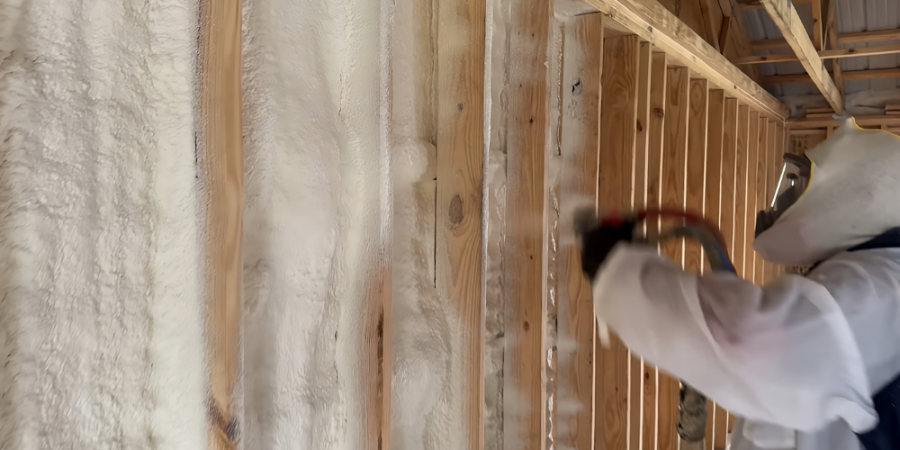
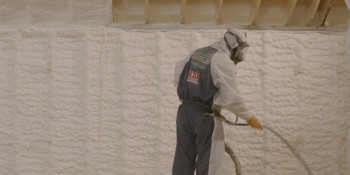
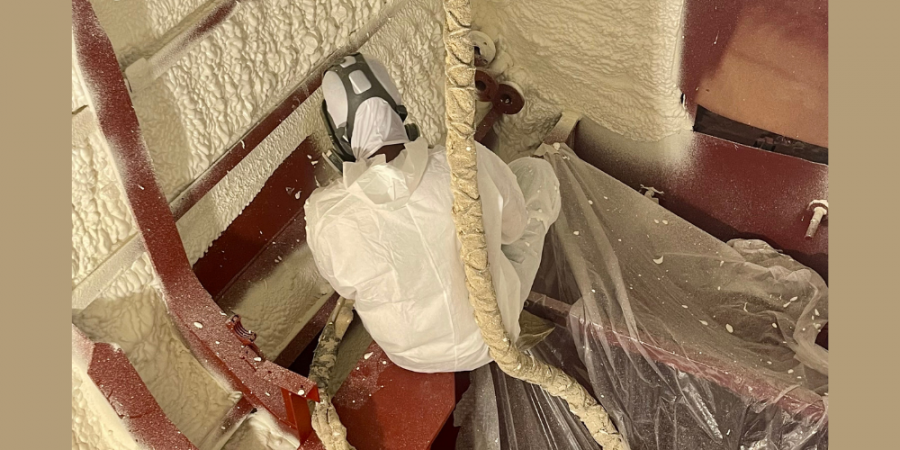
Foam was applied to the walls and between the floors of the Fix This Build That headquarters.

Spray Foam Magazine – February 2025 – For years, Brad Rodriguez, the creative force behind Fix This Build That, operated out of a modest garage setup. As his brand grew into a digital powerhouse with over two million YouTube subscribers and a massive social media following, the constraints of a residential garage became undeniable. The goal was to inspire makers, from novices to pros, to build with purpose, but Rodriguez needed a facility that matched that ambition.
The solution was a massive undertaking: a new, ground-up headquarters located in College Grove, Tennessee. The vision was a 6,000-square-foot metal structure that would serve as a dual-purpose facility. It needed to be a heavy-duty fabrication workshop capable of handling dust, noise, and machinery, while simultaneously housing a pristine office and editing suite for content production.
However, metal buildings present unique challenges. While durable and cost-effective, they are notoriously difficult to insulate. In the humid subtropical climate of Tennessee, a metal shell can quickly turn into an oven in the summer or a freezer in the winter. Without a sophisticated thermal boundary, the building faced risks of condensation, poor acoustics, and high energy costs. To solve this, Rodriguez turned to the building science experts at Enverge and the installation veterans at 31-W Insulation.
The Challenge: A Climate-Controlled Metal Shell
The primary challenge of the Fix This Build That headquarters was the building material itself. Metal buildings conduct heat efficiently, a distinct disadvantage when trying to maintain a comfortable internal temperature.
The Thermal Bridge Problem
In Tennessee, where summer humidity often hovers near saturation and temperatures climb well into the 90s, a metal roof and wall system acts as a massive thermal bridge. Heat transfers rapidly from the exterior to the interior. Furthermore, when warm, moist interior air contacts cold metal panels in the winter, condensation forms. Unchecked, this condensation can increase internal humidity levels, posing a long-term risk to the precision tools and production equipment housed within.
The Acoustic Conflict
Beyond thermal control, the facility had a functional conflict. The ground floor was designed for loud activities: table saws, planers, dust collectors, and CNC machines. The upper level, however, was designated for business operations, scriptwriting, and video editing: tasks that require focus and quiet.
Brad needed a solution that would:
- Seal the envelope completely to prevent air leakage and moisture intrusion.
- Add structural rigidity to the metal panels.
- Create acoustic zones to separate the industrial shop from the creative office.
The Solution: A Hybrid Spray Foam Approach
After consulting with building science experts, Enverge Spray Foam was identified as the ideal material to address the complex physics of the building. The team at 31-W Insulation, a Goodlettsville, TN-based company with over 50 years of experience, was brought in to execute the installation.
Since the building had distinct needs for the exterior shell versus the interior partitions, a “hybrid” approach was utilized, leveraging the strengths of both closed-cell and open-cell spray foam technologies.
1. The Exterior Envelope: Enverge OnePass Closed-Cell Foam
For the exterior walls and the underside of the roof deck, the team selected Enverge OnePass closed-cell spray foam, which offered:
Structural Enhancement: Unlike traditional fiberglass batts, closed-cell foam is rigid. When applied to the metal panels, it effectively glues the building together, increasing the racking strength of the structure. This was vital for the roof deck, which was constructed of exposed metal panels with no underlayment.
A Vapor Barrier: Closed-cell foam is impermeable to water. By spraying it directly onto the metal substrate, 31-W Insulation created a continuous, seamless vapor retarder. This eliminated the risk of condensation forming on the inside of the metal panels, protecting the shop’s machinery below.
Thermal Efficiency: With one of the highest R-values per inch on the market, OnePass allowed the shop to maximize interior space while providing a robust thermal shield against the Tennessee heat.
2. The Interior Separation: Enverge EasySeal .5 Open-Cell Foam
For the floor assembly separating the ground-level workshop from the second-story offices, the strategy shifted to Enverge EasySeal .5 open-cell spray foam, which provided:
- Acoustic Dampening: Open-cell foam is less dense and has a sponge-like texture, making it an excellent sound absorber. By filling the floor cavities with EasySeal, the installation team created a sound-deadening buffer. This ensures that the whine of a table saw downstairs doesn’t bleed into the audio of a video being edited upstairs.
- Air Sealing: While the exterior walls handle the weather, the separation between floors handles air quality. The open-cell foam acts as an air barrier, preventing fine sawdust, chemical fumes from finishing products, and conditioned air from migrating between the two distinct zones.
Strategic Application and Installation
The installation by 31-W Insulation utilized application techniques to navigate the metal building’s intricate framing. The crew ensured a consistent seal by meticulously coating the steel structure and bridging gaps around fasteners and supports.
The 31-W team utilized high-pressure reactors to apply the Enverge OnePass system. The “OnePass” technology is significant because it allows installers to spray thicker lifts (layers) in a single pass without the risk of exothermic reaction (overheating) that plagues older foam chemistries. This meant the large, 6,000-square-foot facility could be insulated faster, keeping the construction schedule on track.
“Installation was guided by both building science considerations and Brad’s planned use of the space. It wasn’t just about R-value; it was about air sealing and building durability,” said Ryan Decker, Brand Manager, Enverge.
Key Application Areas:
- Roof Deck: The foam was applied directly to the underside of the roof panels. This essentially turned the roof into a “hot roof” assembly, where the attic space is conditioned, preventing heat buildup that usually radiates down into the workspace.
- Girts and Purlins: Special attention was paid to the steel girts and purlins. Spray foam expands to fill the gaps behind these structural members, eliminating drafts that traditional insulation often misses.
Post-Installation Results
With the Enverge system fully cured and the interior finishing complete, the Fix This Build That headquarters has been transformed into a model of modern building efficiency.
The facility now functions as a unified, high-performance system. During the height of summer, the HVAC system will run more efficiently, maintaining a crisp, cool environment without battling air leakage. In the winter, the heat generated by the equipment and heating systems stays inside, drastically reducing utility costs.
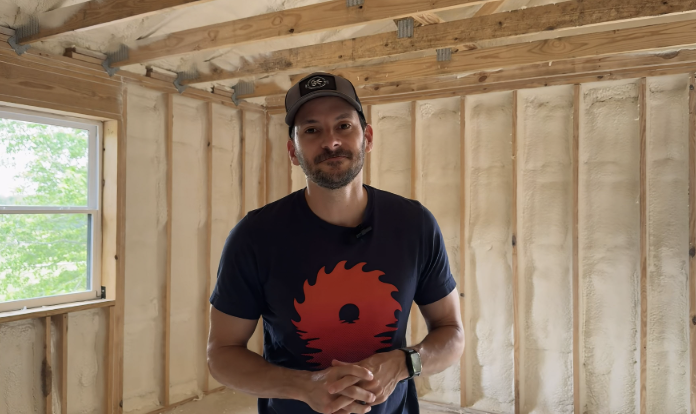
Brad Rodriguez in front of the completed application.
For Brad Rodriguez, the benefits are tangible every day. The office space is quiet and professional, separated acoustically from the fabrication floor. The workshop is comfortable enough to film in for hours without sweat dripping onto the projects or the camera lenses fogging up due to humidity.
“We needed insulation that could handle everything from heavy shop work to content production in the same building,” said Brad Rodriguez. “Enverge spray foam, installed by 31-W Insulation, gave us the thermal control, sound separation, and structural rigidity we needed to make this building work exactly how we envisioned it.”
The Fix This Build That Headquarters is more than just a large shed; it is a testament to how proper material selection can elevate a metal building into a comfortable, commercial-grade facility. By utilizing the specific properties of Enverge’s open- and closed-cell foams, Brad Rodriguez has ensured that his dream shop will remain efficient, durable, and comfortable for years of creative building to come.
Contact Enverge If you have any questions about any of Enverge’s spray foam products or services: 713-239-0252 // EnvergeSprayFoam.com
Spray Foam Magazine does not take editorial positions on particular issues; individual contributions to the magazine express the opinions of discrete authors unless explicitly labeled or otherwise stated. The inclusion of a particular piece in the magazine does not mean that individual staff members or editors concur with the editorial positions represented therein.
See the Business Behind the Story:
Disqus website name not provided.