













One Layer at a Time

Spray Foam Magazine – February 2025 – To ensure optimal storage conditions for onions, it is crucial to keep them in a dark, cool space with temperatures ranging between 32°F and 36°F. If the temperature rises above 40°F, onions can begin to sprout. This not only affects their look but also results in an unpleasant taste and a leathery texture, which can make them less appealing. Additionally, maintaining humidity levels at 60% or lower is vital for preserving the quality and freshness of onions, as higher humidity can contribute to decay and spoilage.
Spray Foam Magazine recently examined how advanced spray foam insulation solutions can assist farmers in preventing the loss of valuable crops, including onions. Bryan Sudsbury, the owner of Central Ontario Spray Foam, established the company in 2021. In a remarkably short time, he has built a strong reputation within the spray foam industry, driven by a commitment to quality and efficiency. His team consists of highly trained professionals who are certified as Urethane Foam Consultants (UFC), equipped to deliver spray foam installations that promote energy efficiency and help clients reduce their rising energy costs.
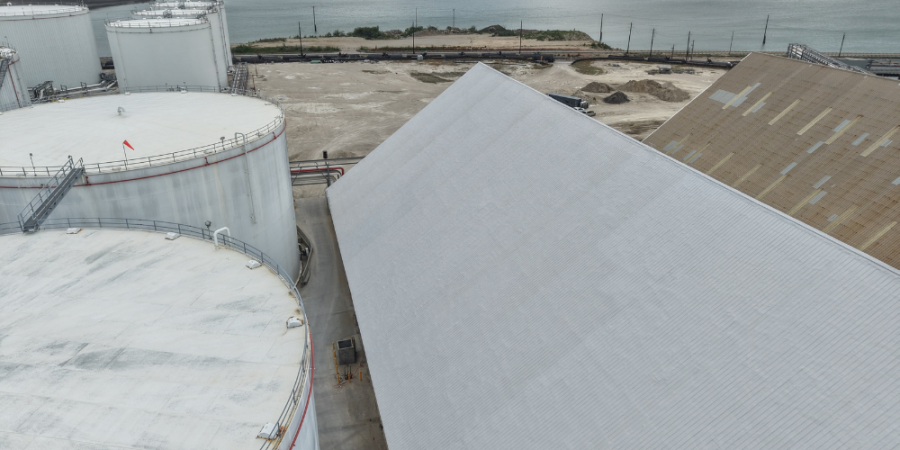
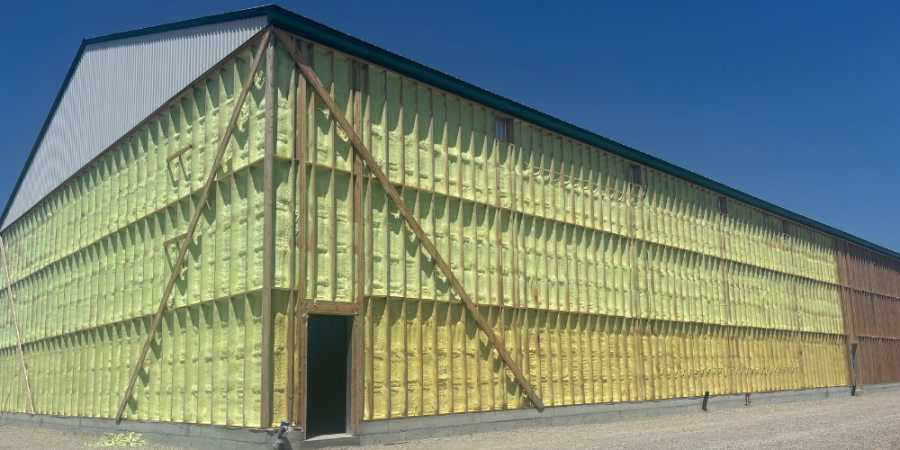
One of Central Ontario Spray Foam's notable collaborations was with a large farm in East Gwillimbury, Ontario, which specializes in the production of carrots and onions. Their latest project focused on installing spray foam insulation in a new metal building designed explicitly for onion storage. The building measures an impressive 490 feet long, 75 feet wide, and 22 feet high, providing ample space for the safe storage of these essential crops.
Constructing a robust and sustainable steel building envelope is heavily dependent on the quality of its roof and metal panels. These panels typically lack built-in insulation, making it essential to incorporate spray foam insulation to enhance the overall energy efficiency of the structure. Proper insulation helps maintain the necessary temperature and humidity levels for onion storage, significantly reducing the risk of spoilage.
When the Central Ontario Spray Foam crew arrived at the site, they carried out thorough checks of their protective equipment (PPE), which included high-quality masks, protective suits, gloves, and work boots. Ensuring that all necessary safety signage was adequately displayed, they remained vigilant about weather conditions that could impact their work, particularly concerning overspray and moisture. For optimal surface preparation, they took special care to ensure that the metal panel surfaces were completely free of lubricants, moisture, dirt, and other pollutants before applying the spray foam insulation.
The crew meticulously prepared their Bolair rig, ensuring it was fully equipped with the necessary tools and materials. Key tools included the E-30 Elite spray foam machine, a powerful Perkins 4-cylinder diesel generator, barrels filled with high-quality spray foam, and a state-of-the-art Graco Fusion PC gun. Furthermore, they ensured that essential safety equipment, such as a comprehensive first aid kit, an eye wash station, and a fire extinguisher, were on hand, alongside an impressive 210-foot hose for application.
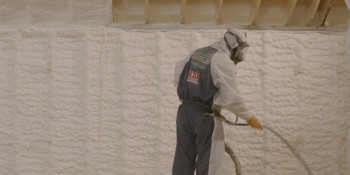
Before beginning installation, the crew took great care to prepare the building site comprehensively. They set up clear signage to inform everyone on-site and utilized tape and tarps to protect against overspray. For this significant project, they chose Boreal Nature Elite, a closed-cell, medium-density foam produced by the Canadian company Genyk. The application involved expertly spraying two inches of foam onto the exterior walls, with plans to layer steel sheeting on top once the foam was installed.
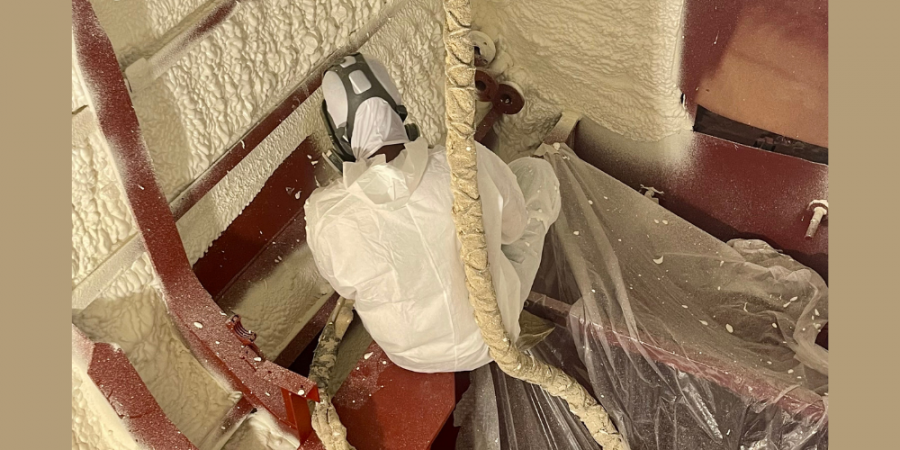
Employing the recommended “picture frame” technique, acknowledged by the Spray Polyurethane Foam Alliance (SPFA), ensured optimal insulation while preventing foam from seeping between girts and architectural metal wall panels. This technique is crucial to avoid distorting the metal structure during and after installation. The crew paid close attention to applying two inches of foam insulation in the attic space, sealing every gap and crack in the metal building's structure with precision.
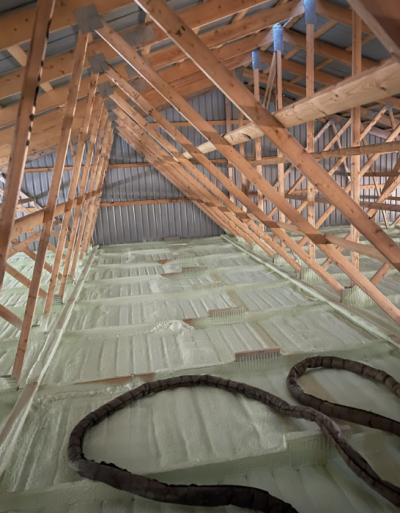
Two inches of Boreal Natural Elite closed-cell foam were applied to the attic spaces.
Their focus extended to areas around vents, pipes, and electrical wiring, which are common entry points for air and moisture. By using appropriate sealants and flashing tape, they effectively blocked potential air and moisture infiltration, eliminating the risk of condensation, and preserving the integrity of the insulation. Ultimately, the crew completed the installation of an impressive 32 sets of foam for this project, significantly enhancing the building's insulation capabilities.
They also ensured that proper ventilation was implemented through soffit vents, ridge vents, or gable vents, facilitating air circulation and preventing moisture buildup that could harm the stored onions. The project was completed in thoughtfully planned phases, typically taking two to three weeks for each phase. Once the foam was fully installed, the crew meticulously cleaned the site, removing large, uncured foam pieces with scrapers and properly disposing of all tarps and tape.
By adhering to these best practices, farmers can significantly improve the freshness of their produce and minimize waste, contributing to more successful agricultural operations overall. This attention to detail not only safeguards the quality of the onions but also supports farmers in maximizing their crop yield and profitability.
Disqus website name not provided.