








Cementing the Prep

Spray Foam Magazine – February 2025 – Lake Ralph Hall in Ladonia, Texas, stands as a remarkable new man-made lake. To support the dam's construction, the cement batch plant required three frac tanks for a consistent supply of hot and cold water. Maintaining the hot water at a precise 140°F and the cold water at 36°F was non-negotiable for the client, as it directly impacted cement transport and curing times.
They turned to Spray Tex Insulation for an effective solution. Scott Berni, owner of Spray Tex Insulation, is a leading spray foam insulation contractor with a strong reputation in Sherman, TX, and the surrounding areas since 2017. When the Project Manager of the dam reached out, Scott confidently assured him that his experienced team could maintain the required temperatures in the frac tanks. The client required an effective strategy to control the water temperature inside the tanks to ensure optimal cement curing during transport to the dam site.
After establishing the target temperatures with the cold-water supply at 36°F and hot water supply at 140°F, Scott consulted with his building science coach, Jeremiah Bryant, from Factum Consultants. Together, they rigorously analyzed historical weather data to determine the average Delta T for both hot and cold-water supplies, as well as the average turnover rate for the tanks.
Based on their findings, they decisively chose to implement three inches of closed-cell foam with an elastomeric topcoat. This choice ensured maximum durability and effectiveness, as the frac tanks would be subjected to harsh environmental conditions. Scott and his team were committed to delivering a solution that met the client’s needs without compromise.
The five-person Spray Tex Insulation crew was committed to achieving maximum efficiency despite tight time constraints. The team included:
- Steve Abbott - Production Manager,
- Manuel Medina - Lead SPF Sprayer,
- Kyler Means - Lead Coatings Sprayer,
- Seth Avery - Prep/Cleanup, and
- Radney Weeks - Prep/Cleanup.
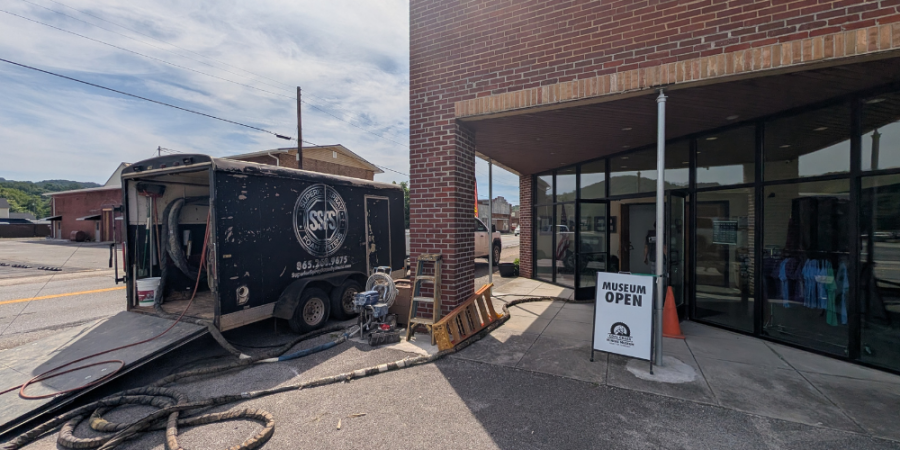
Upon arrival at the site with their rig, which featured a Graco Reactor 2 E-30, a 250-foot heated hose, a 10-foot Ultralight heated whip, and a Titan 840 Airless Sprayer, the crew sprang into action. They prioritized safety by conducting thorough safety talks, reviewing personal protective equipment (PPE), setting up clear signage, evaluating overspray considerations, and cleaning the site effectively.
The project CMAR safety team conducted a comprehensive site safety orientation before mobilization. Following that, the crew held daily tailgate safety meetings to address potential hazards around the active worksite, assess wind speed and direction, monitor humidity levels, devise a strategic plan, and finalize a Job Safety Analysis (JSA).
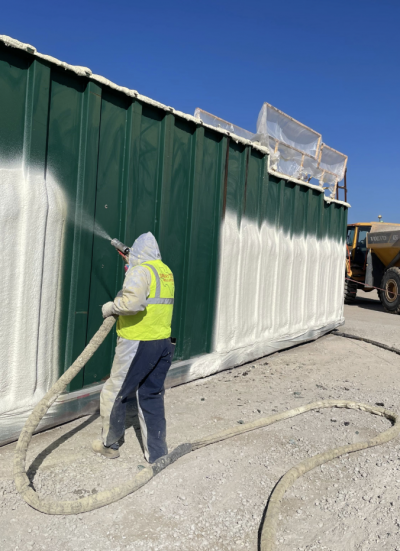
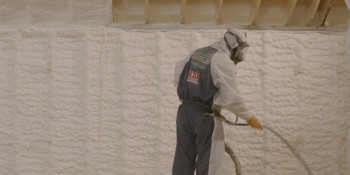
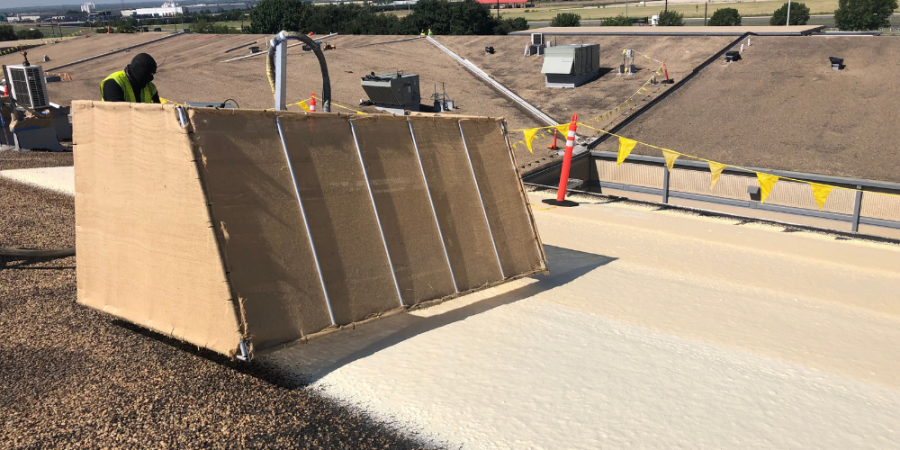
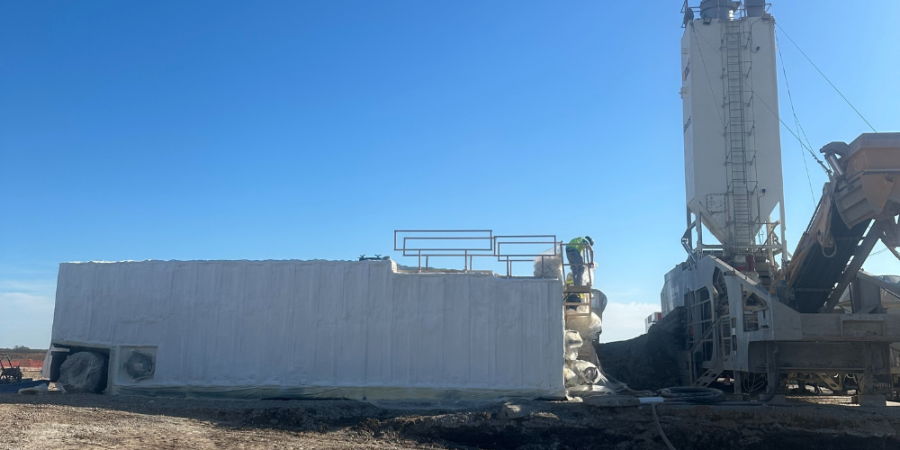
The crew applied three inches of AMBI-TITE 204 closed-cell foam to the sides and roof of each tank.
The crew decisively identified the best staging area for their work, guided by wind conditions to minimize overspray. They established a 100-foot buffer zone, ensuring the worksite remained operational while providing a secure environment for the crew to execute their tasks. Additionally, they proactively covered any items within the buffer zone with extra plastic to effectively combat overspray.
The frac tanks are mobile and must remain operational. This required the crew to take additional steps to ensure the functionality of the tires, lights, and air brake connections. Once those checks were complete, the crew suited up in standard SPF personal protective equipment (PPE), including SAS Moonsuits, gloves, steel-toe boots, 3M respirators, and hard hats. Notably, fall protection was unnecessary for this project, as designated catwalks and handrails were already in place.
Upon inspection, the crew identified that one of the tanks was filled with 36-degree cold water, which posed potential adhesion issues since it fell outside our substrate parameters. To address this, the crew commenced work on the first two tanks while utilizing the water from the third tank for ongoing production. After emptying the third tank, the crew employed a 600,000 BTU Frost Fighter through the manhole ports to effectively dry any residual moisture and heat the substrate to an acceptable range.
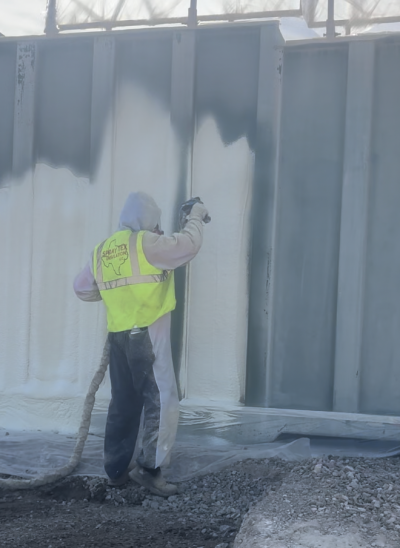
Lead SPF Sprayer Manuel Medina prepared the chemical mixture and precisely adjusted the heat and pressure settings ahead of the spraying process. Once preparations were finalized, it was time to execute. The crew applied three inches of AMBI-TITE 204 closed-cell foam to the sides and roof of each tank, utilizing a total of 2.8 sets of foam across all three tanks. Subsequently, they applied Rustoleum 750 Elastomeric Coating, strategically chosen for its rain-resistant properties and local availability.
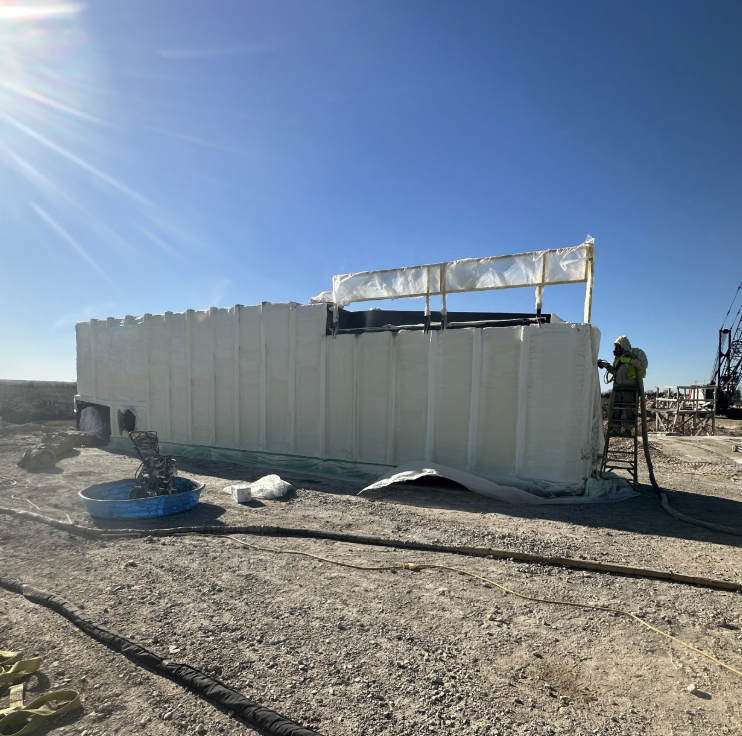
Thanks to the meticulous prep work carried out by the Spray Tex Insulation crew, the cleanup process was remarkably straightforward. All stairwells, handrails, valves, lights, and tires remained spotless and unobstructed. This allowed ample time for the coating to become tack-free, enabling the crew to efficiently remove all tape and plastic once the job was finished. The entire project was completed in three days, primarily due to one tank being full upon arrival, which extended the drying and warming process.
The project was a resounding success, and the client expressed complete satisfaction with the outcome. “Spray foam is not merely a solution for homes and offices; it is a versatile tool for addressing various challenges. We thrive on these unique, outside-the-box specialty applications. With 95% of our work dedicated to interior commercial and residential projects, we eagerly take on distinctive issues for our clients. I extend my gratitude to our Spray Tex team, Lauren Meyers with Ambit, and Jeremiah Bryant for their unwavering support,” affirmed Spray Tex Insulation owner Scott Berni.
Disqus website name not provided.