












Engineering an Oasis


Spray Foam Magazine – Winter 2025 – A babbling stream from an underground bog rushes down rocky rapids. The water is filtered by live aquatic plants as it cascades into the shimmering basin below, which is capable of holding 25,000 gallons of water. The pool gets gradually deeper as you wade down the three-tiered levels. Swimmers can lounge around the pond’s radiused edges, then back float up for a drink at the swim-up bar made out of a repurposed grain silo. This isn’t a pool at a luxury spa or wellness retreat—it’s in Nathan Lange’s backyard, and he designed and built it himself using several materials you may not expect.
Underneath the rock slabs at the bottom of this pool is a layer of Genyk 3LB roofing foam encapsulated in a smattering of Genyk Duraflex polyurea coating. Given the pond’s curved shape, this combination proved easier to work with than a traditional pool liner. Using roofing foam and polyurea coating gave Lange the freedom to execute his vision without compromising any of the finer details.
From Rocky Starts to Foamy Futures
Lange’s approach to this project mirrored his approach to his entire spray foam career—let’s give it a try and see what happens. If it keeps working, we keep going.
Lange ended up in spray foam somewhat unintentionally. Before he’d ever squeezed a spray gun, his family’s business was called Northland Monuments. For years they won their bread by providing stonework and masonry services to Longville, Minnesota and surrounding areas. Lange’s foray into spray foam began in 2006, when he and his wife Lori were building their home. He wanted to spray foam his new construction and figured by DIYing it, he could get the insulation done on the cheap.
Afterward he planned to sell the equipment at a profit. But, things worked out a bit differently. “I was spraying my own house, and I didn’t even know what I was doing, you know, obviously learning. In the middle of that, I got asked, hey, can you spray foam a garage? Can you come spray foam this? Can you spray foam that?”
With a brand-new mortgage, Lange wasn’t about to let easy money slip through the cracks. For the next few years, he found himself doing a lot of spray foam jobs for people. Lange worked for the stone company during the day, and on nights and weekends would strike out on his own for spray foam.
By 2015, he had hired a couple employees to take over sales on the spray foam side. In 2018, Lange had officially purchased Northland Monuments from his parents. They rebranded the company as Northland Companies, now with multiple divisions, including spray foam.


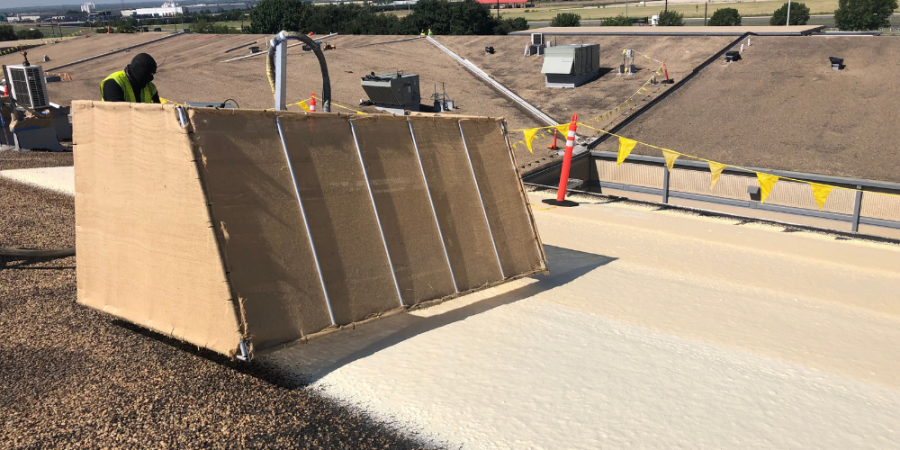
The Genyk 3LB Roofing foam adhered well to the many substrates within the pond: dirt, cement block, gravel, and aluminum.
Planning Paradise, or: “You’re Sure This’ll Work?”
Around 2022, the Langes both decided it was time to have a spot to swim in their own backyard. But if they were going to do it, Nathan Lange thought they should take the opportunity to try something really special.
“We started looking into natural swimming ponds,” he said.
One major snag with that idea was the sheer difficulty involved in installing a standard rubber liner in a uniquely-shaped pool. Lange didn’t want a rectangular or square pond. He wanted a natural shape and had designed his project to have curves and radiuses. He needed to use a liner material that could accommodate this creativity, not impede it.
Coincidentally, around the same time Lange had started his pool-pond research, Shawn Gauthier from Genyk Polyurethane posted a picture of how he’d used Genyk products as a liner for a small pond. Lange immediately messaged Gauthier to see about making that work with his own project.
As Genyk’s National Tech Support representative, Gauthier knows a thing or two about the product’s limitations, so Lange was floored when he confirmed that his idea was totally doable. Even though he’d never seen it done on a project of this size or scope, Gauthier was positive the 3LB roofing foam and Duraflex polyurea was just what Lange needed. Using roofing foam meant they’d have a water repellent foam layer, and the polyurea would make it impenetrable no matter how many hundred tons of rocks they poured on top.
What’s more, now they’d be able to dig their pond into any shape they wanted. It would be easy to accommodate for the pond’s unique shape as well as the structures around the pool, like the swim-up grain bin bar. They had their game plan mapped out and were ready to start digging.


After the roofing foam cured, they added Genyk Duraflex polyurea. This combination is just about impenetrable, and will keep water in and jagged rocks from slicing the liner.
Digging the Dream
In Fall 2023, Lange broke ground on the pond with the help of his son Seth, who runs UpNorth Landscaping company. The two were excited to use this project as a chance to upskill their spray foam knowledge to be on the same level as their knowledge about stone. The two did all the digging work themselves. For the waterfall, Lange hired LCM Outdoor Living, who came all the way out to Colorado, for a couple days to help build the waterfalls that would supply water to the pond.
A quick side note about the oasis: When we say it’s a pond, we mean it. There’s no chlorine, just all-natural water kept crystal clear with the help of beneficial bacteria and aquatic plants. Up on top of the waterfall area is what’s known as a bog filter. It works by pumping water through four feet of rock, down through aquatic plants which act as a filtration system before the water reaches the pond below.
Now back to the Langes: Excavating the dirt, and building up the concrete retaining walls around the perimeter was all old hat for Nathan and Seth. The real tasks were the foam and the coating.
Lange had years of foaming experience already, but still wanted to use every resource available to make sure things went off without a hitch. He enlisted his own spray foam team from Northland Companies, and had Shawn from Genyk come out a few times to help get the guys dialed in and assuage Lange’s growing apprehensions.
See, the project consisted of several hundred tons of gravel beneath the liner, plus additional slabs of rock on top of the liner. Lange started feeling a little leery while looking at the sheer amount of rock they’d be using. In all, they used about 430,000 pounds worth of stone to build the pond, or approximately 215 tons.

They covered the foam and polyurea liner with rocks to give it a more natural feel.
“My biggest concern was, will it hold up to all this weight? And Shawn’s going, yes, it’ll stretch.” Lange adds, “You also use this eight-ounce fabric that you put between the liner and the rock. So that helps protect stuff a little, but man, that polyurea, you could hardly cut that stuff with a knife.”
Since they were spraying very close to his house, the team did extensive prep work to cover everything in plastic masking. The weather had a lot of variability, and sometimes they’d need to be more diligent depending on the wind conditions and direction that day. They also had to periodically check the moisture levels in the dirt before spraying, since high soil moisture would compromise the foam’s adherence.
The Main Event:
Foaming A DIY Paradise
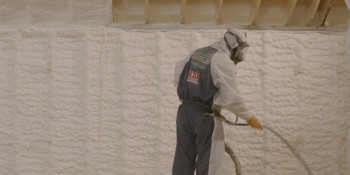
When it was time to foam, Lange’s team used a Graco Elite E-30 with a Graco PC gun to spray both the foam and the polyurea. They sprayed two inches of the roofing foam onto the pond’s open graded dirt-based floor, plus two inches onto its cement block walls. Once the foam hardened, they switched over to the Duraflex Polyurea, spraying it over top of the foam. In all, they used about one set of polyurea, and around one and a half sets of roofing foam.
Being resourceful to the core, the Langes decided to work with the equipment they already owned, even if it presented a few more challenges to navigate. “There was a little extra prep work with the E-30, because it’s not actually designed to spray polyurea. It can, but you got to heat the product up a bit more than normal. That gets the pressure up where it needs to be, and I think it’s okay since we’re not doing it every single day.”
For Lange and his team, getting used to the roofing foam, that was a learning curve, too. “It just sprays differently. Reacts differently, lays flatter. So, you’re not spraying as thick.” He goes on, “To me, it’s slower reacting. You have to let it grow and get to where it needs to be before doing another pass over top.”
They also had to complete most parts of the pond in sections due to limited access. Thankfully, the teams that were helping Lange were flexible and accommodating. They could dig and foam the pond in sections, which was helpful given the limited space around some areas of the pond. They foamed and coated the pond as they dug, connecting all the sections together seamlessly to create a monolithic, impenetrable pond liner.
And when they needed to cut some of the foam liner out in certain sections to add plumbing, it was quick and easy to remove and reinstall. “That’s one thing that was great about the product– we could just touch it up and keep moving,” said Lange.
Nathan Lange’s backyard is proof that resourcefulness goes a long way in making a dream reality. Lange began his backyard pond project with the intention to give his hard-working family somewhere to relax and unwind. In doing so, he got to stretch the limits of their collective imagination and create something one-of-a-kind. Now, the Lange family gets to enjoy their very own hand-crafted backyard oasis. Even better is knowing that they conceived of and built this little slice of paradise with their own hands– thanks to the help of some friendly experts who don’t believe in the word impossible.

Disqus website name not provided.