












Planning & Planing
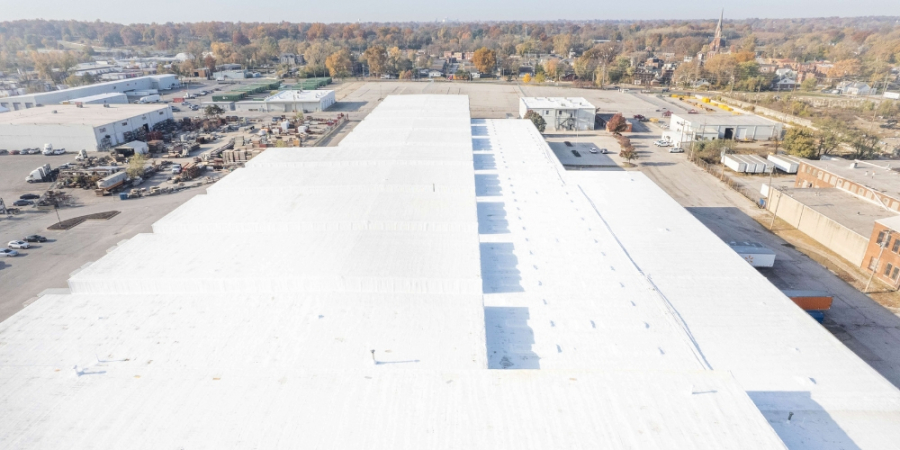

Spray Foam Magazine – Summer 2026 – R&A Contracting specializes in roofing solutions in Missouri’s greater St. Louis metro area, and recently completed an ambitious and award-winning job at a multi-building trucking company complex. In just ten weeks, the R&A team sprayed 330,000 square feet with 2.8 LB Everest closed-cell spray foam and HT Everest Acrylic Coatings across seven separate buildings located on St. Louis’s Hall Street. These 100-year-old buildings had foam and coatings installed nearly 25 years ago by R&A’s owner and founder, Sam Rowley, but the existing foam was at the end of its life and needed replacing. But before they could install the new foam, the team had to perform extensive prep work by scarifying and priming the roof’s existing spray foam system. They were also racing against the changing seasons to try and finish before the Midwest temperatures dipped too cold for the foam to cure.
This job was special, and not because it was massive and complicated. It was a full circle moment for Sam, who had installed original foam and coatings to the buildings over two decades ago. His work had held up well through the years. The buildings had changed ownership in 2020 but R&A continued to keep in contact with the new owners, working over the course of two years to make minor repairs and bring the roof back under warranty.
“Other than some minor storm damage and repairs, the original foam and coatings were performing well with no reported leaks,” said Sam.
In the midst of making the small warranty repairs, a tornado ripped through the St. Louis area and pummeled the roof with two-inch hail. Still no leaks in sight. But not wanting to push their luck, the building’s management filed an insurance claim to get the old foam system replaced, and Sam met with the adjusters to get the claim ratified.
By September 2025, they were ready to start making a battle plan for this massive undertaking.
“It was one of our most ambitious and logistically complex undertakings to date,” said Hannah Harris, R&A’s Administrator. She visited the work site several times and documented the process with photos. With so many moving parts, it looked like a chaotic puzzle at times, but the entire team worked together to make a masterpiece out of the madness.
Before they could spray the new foam, they needed to scarify the existing foam on most of the buildings.
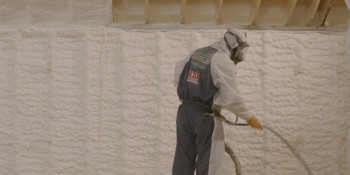
Scarifying involves using a bladed planer, known as a scarfer, to remove about one-half inch to three-quarters of an inch of the old foam. It’s commonly done when the current foam is in good enough condition to not require full removal. It saves time and energy, but they had a lot of roof to cover in relatively little time.
Phil Bell, Senior Project Foreman, said timing everything just right was the most challenging part. “One of the scarifying units always had to be further ahead of the foamers,” he said, adding, “and sometimes we couldn’t even start foaming until 10 am because of moisture and dew. Then as winter got closer, the days got shorter and the temps colder.”
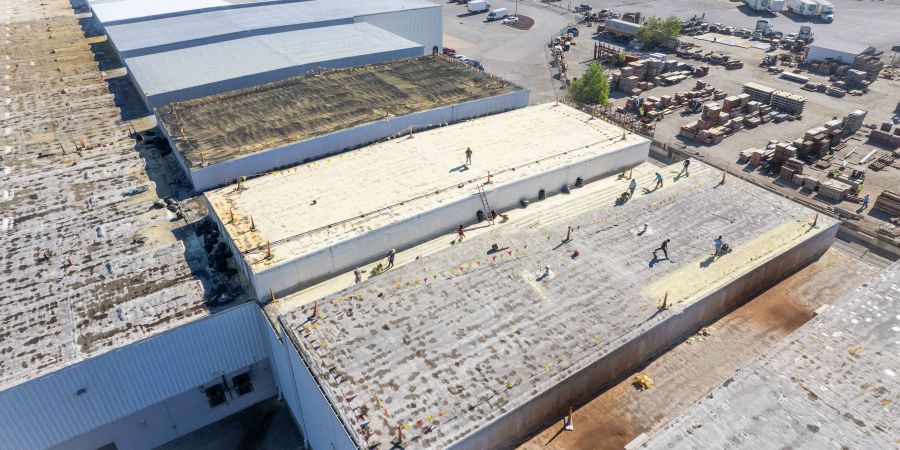
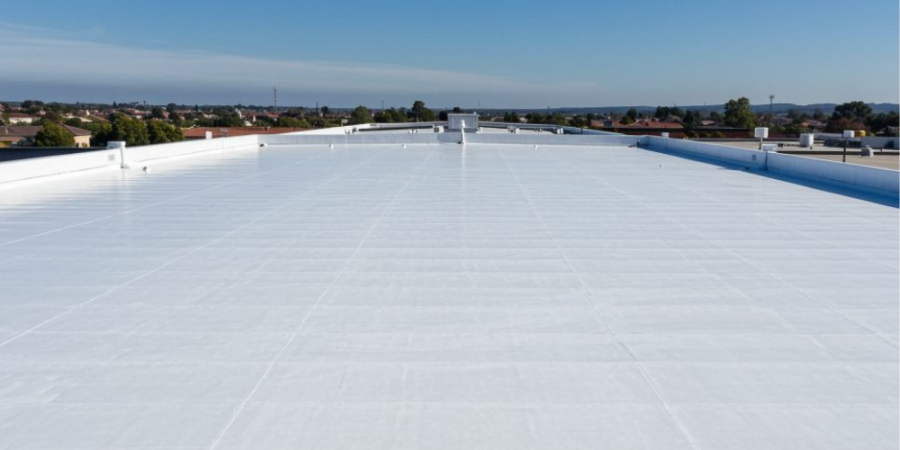
The teams worked in sections, with the scarifying crew alwaysahead of the foamers. In the background, the pristine white roofs have been foamed and coated, while the helpers in the foreground work prep the next sections;
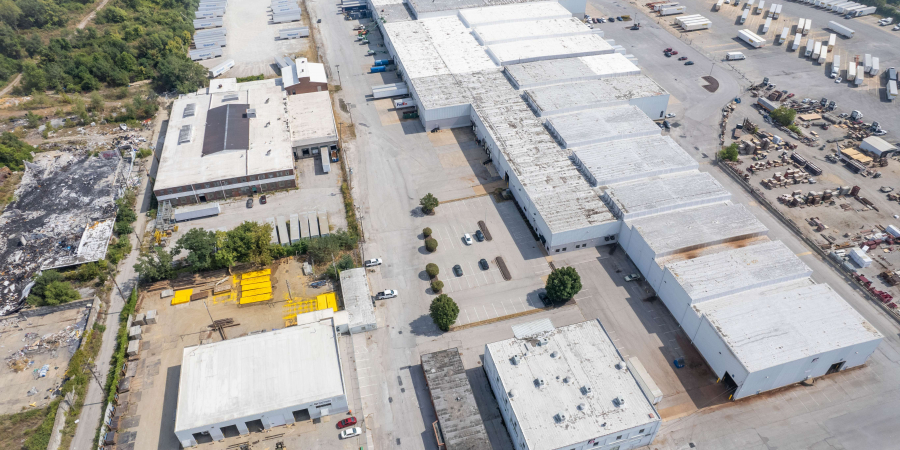
Before the application— Sam from R&A had installed foam and coatings to these roofs 25 years ago, and was honored to take on the job once again.
They scarified five of the seven roofs. The two not scarified had a TPO roofing membrane, which remained.
If after the scarifying they noticed the damage was deeper than what they'd planed off, they’d remove the foam down to the previously existing substrate and then build it back up with new foam. Fortunately, only a few sections were damaged enough to warrant complete removal. Scarifying is messy work, but the helpers worked clean, gathering up the foam chunks and shavings on the roof and the ground.
“We had guys constantly cleaning the foam debris off the ground because it was really windy and blew everywhere,” said Phil. “This job generated a lot of trash, and it was hard to keep up with the dumpsters. They filled up so fast.”
After scarifying, they primed the roof. Then, if the wind was strong, they covered or moved any vehicles on the ground using car covers before spraying.
The magnitude and tight turnaround for this job meant they needed all hands on deck, so they worked in crews of 10 to 15, depending on what the day called for. On the busiest days, they had three rigs and five guys dedicated to foaming, and divided the rest of the labor between helpers: scarifying, priming, cleaning, and moving the rigs on the ground and repositioning the hoses on the roof.
Never one to miss out on the action, Sam was on site often to get some spray time in, just like old times.
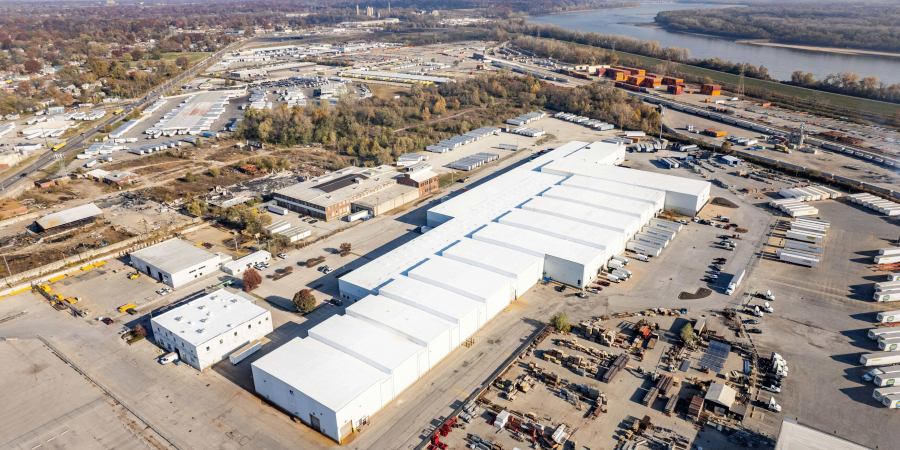
The fresh foam and coatings will hold up for another 25 years, at least. Pretty good for 100-year old buildings!
It was a complex dance to coordinate the crews and keep idle time to a minimum. Adding to the difficulty was the fact that ground traffic to the buildings never stopped. Semi-trucks came and went at all hours, and R&A even had four truckloads of materials delivered to the site. In all, the job used 160 sets of 2.8 LB Everest closed-cell spray foam, and 400 drums of HT Everest Acrylic Coatings from American WeatherStar.
“This job definitely kept us on our toes, between coordinating shipments, timing dumpster and barrel swaps, working around wind and parked cars, and keeping up with what was happening on the roof,” explained Pat, a foreman for the ground operations and coatings portion.
When the helpers finished scarifying, priming, and cleaning a section, the foamers could finally spray. But even this part wasn’t straightforward. The roof had no interior access, so they used a boom lift to get up and down. The roof crew had to be in lockstep with the ground crew by communicating when and where to move the rigs. As the foamers sprayed, the helpers repositioned the hoses. Not every part of the roof was perfectly flat, either. They had to maneuver around obstacles such as vertical walls, barrel roofs, and uneven elevation in some sections.
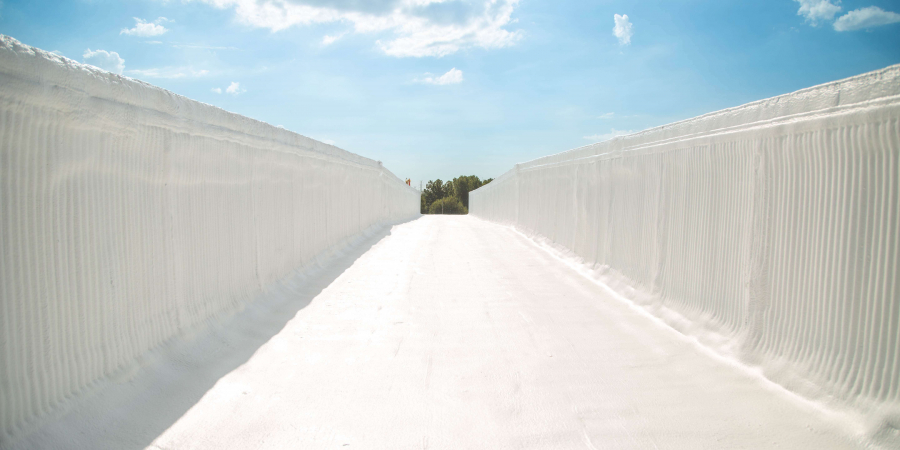
It wasn’t a picnic, but having an experienced team and all the right tools made it easier. The foamers used three different rigs: Graco H50, A PMC PH-40, and a Gusmer H-2000, all of which were fitted with GX7 spray guns. They installed an inch and a half of 2.8 LB Everest closed-cell spray foam. Once the foam cured, they added two coats of HT Everest Acrylic Coatings– base in grey, top in white. While spraying, they paid attention to the wind direction to keep overspray on the ground to a minimum. It was a lot to keep up with, but the team enjoyed the challenge.
“This wasn’t a simple project, but everyone did their part every day, and because of that it went really smoothly,” said Pat. “There was always something to figure out or plan for to keep the crews moving. Watching it all come together was really rewarding.”
At one point during the ten-week spray-a-thon, a crew worked 21 consecutive days to get everything done. It was grueling at times, but their team’s dedication was just the edge they needed. In mid-November after a challenging ten weeks, they wrapped up just in time for winter. In January 2026, R&A was thrilled to receive the American WeatherStar Rick Napper Spray Foam Roof of the Year Award for their efforts. The secret to crushing this daunting project was to take each step by the day, hour, and minute. They just kept showing up and taking everything in stride, and the rest is history.
Published by Spray Foam Magazine
SprayFoam / Spray Foam Insulation
See the Business Behind the Story:
Disqus website name not provided.