













Foam Fit for the Royal Canadian Air Force
PHOTOS: HARBOURSIDE SPRAY FOAM

Spray Foam Magazine – Summer 2026 – In the winter time, there’s usually slim pickings for outdoor spray foam jobs, particularly in northern climates like coastal British Columbia, Canada. But Harbourside Spray Foam of Nanaimo, BC, proved that an outdoor spray job in February is entirely doable, even if you live on the Canadian coast. The secret is sticking to a strategy, using the right products, and keeping a good attitude when facing surprise weather challenges.
Owner John Harrington and his partner Derek Cox are a two-man machine with 13 years of combined spray foam experience. This dynamic duo has installed foam all over their Vancouver Island community and surrounding areas on BC’s Sunshine Coast.
“John is from Ireland. I’m from Newfoundland and Labrador,” Derek said. “We’re both a long way from home, but we gel really well and make a good team.”
This winter, Harbourside scored a job installing four passes of Genyk Polyurethane’s Boreal Nature Elite (Winter Blend) closed-cell foam to the corrugated metal ceiling of a pavilion at the Royal Canadian Air Force Museum in their ometown of Comox, and would like to extend their appreciation to Ryan Soman, their Genyk representative, for his support on the project.
In Plane Sight: Foaming Around the Fuselage
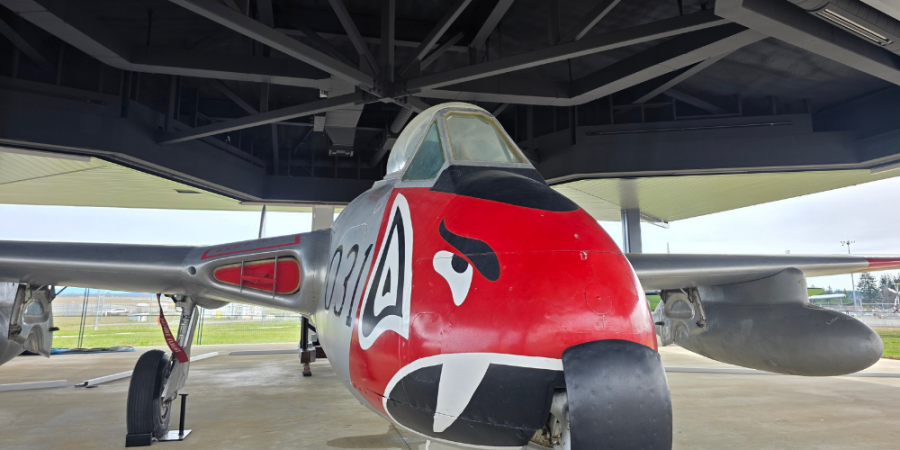
Situated on the site of the Canadian Forces Base, the museum displays some of the aircraft outside on the grounds, but preserving older planes requires more precautions. These vintage military aircrafts feature classic workmanship and original materials, such as a wooden cockpit, leaving them vulnerable to exposure to the elements.
Leaving these planes exposed to BC’s harsh weather conditions year-round would have them rotting away faster than you can say, “fly, fight, and win.”
To protect these pieces of Air Force history, the museum used funding from the Department of National Defense to construct a glass pavilion to store and showcase these military marvels. The architects designed the pavilion’s corrugated steel roof around the shape of the plane to allow museum visitors to view the suspended aircraft up close and personal from behind the glass walkway along the pavilion’s ceiling. Before installing a protective glass pane around the pavilion, the museum needed to insulate the interior to keep the entire structure temperature controlled in all seasons and any weather. That’s where SPF comes in.
Harbourside received advanced notice about the job through the bidding system. John quickly submitted the bid, and they were delighted to win and spend a few days working on the base. But since the project was still in the planning stage, they had to wait a couple months before they could start the foam installation.
Hoarding, Heaters, and High-Tensile Steel, Oh My!
By the time Harbourside got the go-ahead to venture out to the Air Force Museum site, it was late January and the weather was cold, gloomy, and occasionally wet and rainy. The pavilion was still under construction, and the glass wall panels weren’t slated for install until the very end. This was actually a good thing for the applicators, because it meant less to mask and worry about overspray.
The lack of enclosure required some extra prep-work to help the foam cure in such cold weather. Although they used Genyk’s special Winter Blend, which is suitable to install in ambient temperatures between 14°F and 50°F, warmer is always better. Especially when spraying onto a conductive steel substrate that tends to lose heat. John and Derek didn’t want to take any chances on this job. Instead of winging it, they pitched a hoarding solution to the general contractor, Kinetic Construction.
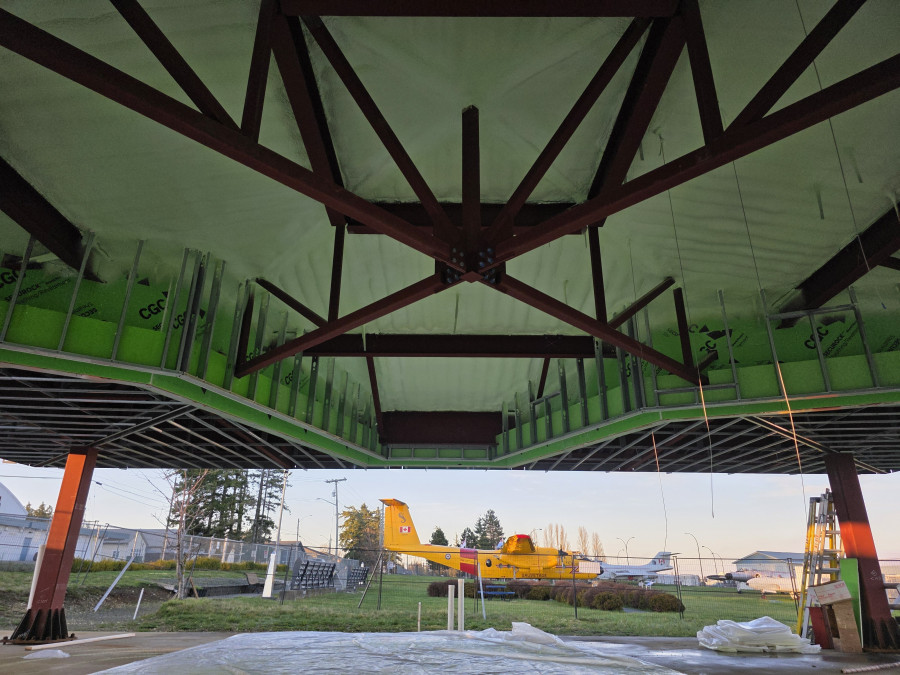
The museum built the pavilion in the shape of the plane it will house. They’ll encase the entire pavilion in glass so museum visitors can catch a 360 view of the plane from an upper walkway.
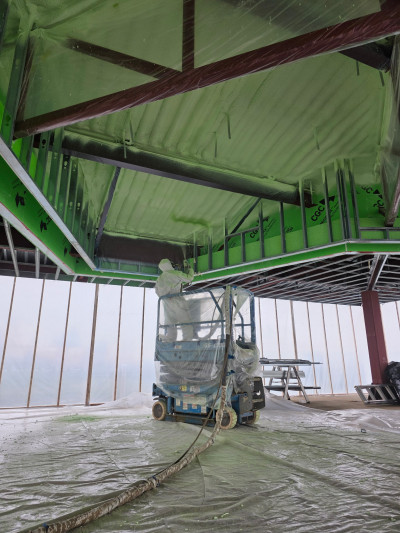
Harbourside installed four passes or roughly eight inches of Genyk’s Boreal Nature Elite Winter Blend to the pavilion’s roof deck.
Kinetic was happy to hook Harbourside up with full hoarding set up around the exposed sides.
They draped six-mil poly around the entire pavilion and sealed the plastic with tape. Then, they rented a diesel heater to warm up the interior and the corrugated steel substrate before spraying. The hoarding plus heater helped threefold: it sealed in warmth, dried up residual moisture, and contained the overspray. Harbourside also used plastic to mask the roof beams, the concrete floor, and the scissor lift they’d use for overhead spraying. After spending two days on prep, they were cleared for take-off.
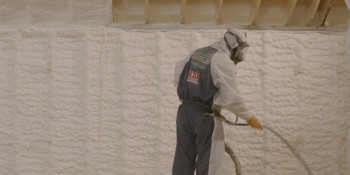
John kept things rolling in the rig– keeping a close eye on the Graco Gusmer GH-4 Hydraulic Proportioner and changing out a couple sets of foam as needed. Derek was both the eye in the sky and the boots on the ground. He sprayed the pavilion’s metal ceiling in four passes from atop a scissor lift using a Graco Fusion AP spray gun with 5252 mixing chamber. To keep a hail of overspray from raining down on him, he wore protective coveralls and gloves, complete with a Honeywell North supplied air respirator with a heavy-duty gas pump for continuous easy breathing. While spraying, he aimed to install an eight-inch layer of the closed-cell Winter Blend foam, but in this case, perfect is the enemy of good.
“Because of the corrugations in the steel, it’s difficult to get a consistent eight inches across the high and low side,” Derek explained. “So, without under or overspraying, we went for an average of eight inches installed over four passes.”
All We Are is (six-mil poly?!) In the Wind
After two solid days of spraying, Harbourside estimated they’d need maybe another day and a half to finish everything and clean up. Mother Nature must have overheard and wasn’t keen on not being included in their plans, so she threw some unexpected turbulence their way.
“At the end of the second day, there was a big wind storm that came through and blew all the hoarding away, so we had to finish it the following week,” said Derek.
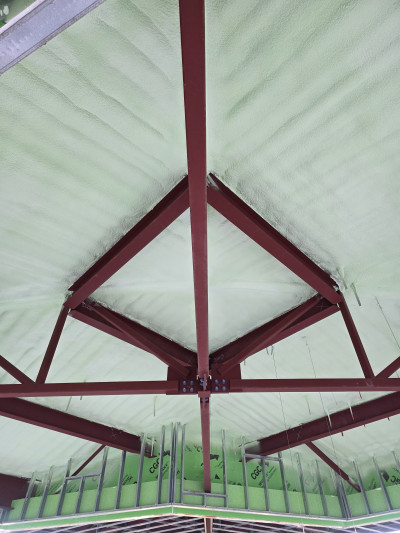
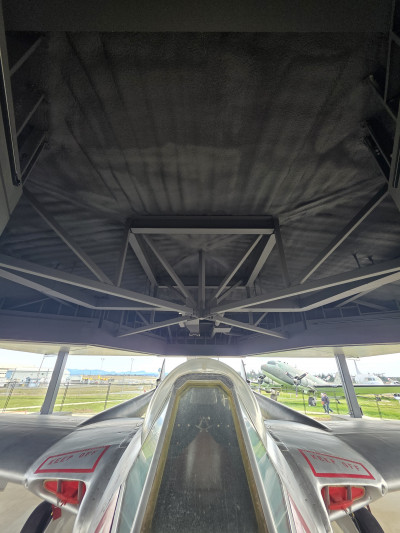
It was far from ideal to have all the hoarding blown down and the job delayed, but Derek considers it a blessing in disguise.
The museum displays some of the newer aircraft outside, but much older models require special indoor storage to prevent rot and decay.
If the hoarding had stayed up for the entirety of the job, they wouldn’t have taken the cool pictures of the jobsite with the museum planes in the background. Seeing those photos on social media are what tipped off Spray Foam Magazine to this story.
“It’s kind of the reason we’re talking right now,” said Derek. “Thanks for that, windstorm.”
Despite the unruly weather, there was no reason for a crash-landing. Harbourside stayed on-course and completed the job in about four days total, not including the weeklong post-windstorm pause. The museum pavilion’s ceiling is now encased in an eight-inch layer of Genyk Boreal Nature Elite Winter Blend closed-cell foam.
The foam will keep the pavilion’s inside conditioned, and forever protect the historical aircraft from destructive moisture and seasonal temperature fluctuations.
Harbourside’s diligent foam work means the plane’s futures are no longer up in the air; the aircraft will now stay indefinitely preserved for generations to come.
Published by Spray Foam Magazine
SprayFoam / Spray Foam Insulation
See the Business Behind the Story:
Disqus website name not provided.