










No Mulligans on Moisture
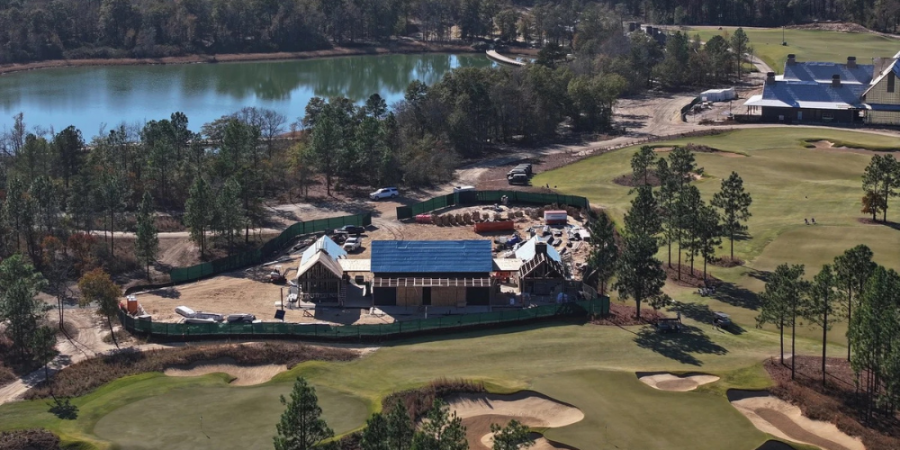
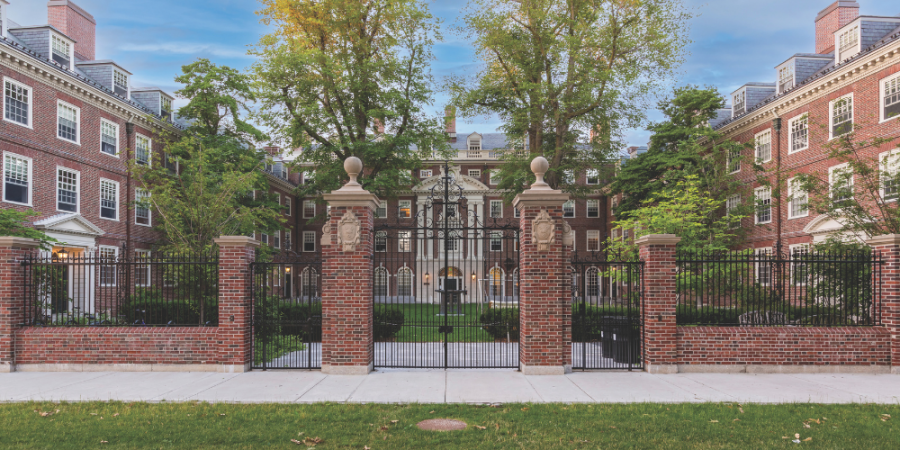
Photo Credit: RANDALL HOLL, HOLL ARCHITECTS

Spray Foam Magazine – Show 2026 – What business does spray foam have on a golf course? Let’s ask Michael Rucker, the owner and operator of Over Under Foam Improvements, LLC (OU) out of Perry, Georgia.
He was recently contracted to insulate an under-construction luxury golf resort called The Fall Line in Mauk, Georgia.
The foam didn’t go under the green or near the holes–instead, seven inches of Natural Polymers HFO 2.0 closed-cell foam went onto the roof deck and walls of the golfer’s lodges and in the midway turn house. Rucker insulated over 215,000 board feet, locking in the expected comfort necessary at a resort of this caliber.
Over Under was referred to The Fall Line by Rucker’s friend, who owns a painting company. The friend knew the general contractor was looking for someone skilled and reliable to tackle the insulation. The painter put Rucker in touch with the GC, Hoar Construction of Alabama. After speaking with Rucker about insulation options, they invited Over Under Foam to bid on the job. The bid was soon accepted, and Rucker got the go-ahead to begin spraying. He completed the lodges in phases before moving on to the turn house, wrapping up all the lodges and the turn house in December 2025.
Mauk is a small, quiet Georgia town about an hour away from Rucker’s home base in Warner Robbins. Commuting to and from was no problem. “There’s not even a stoplight,” recalls Rucker about the rural area that The Fall Line calls home.
As such, the golf resort is poised to be an important economic draw for the rural area. The owners’ vision was to create a serene, private golfing getaway full of high-quality modern amenities. Beyond being aesthetically stunning, the lodge, condos, and turn house had to be the picture of class, comfort, and quiet in all seasons. So, in addition to the seven inches of Natural Polymers closed-cell foam (R49), Rucker also layered each of the building’s exterior walls with Rockwool (R23). He installed fiberglass batts (R11) to all of the interior walls.
Prep: The Pre-Swing Routine
This new construction had Rucker foaming the walls and roof deck of six golfers’ lodges. Each lodge contained four individual condos where resort patrons can catch some R&R before heading out onto the sprawling 6,000-acre golf course. Smack dab in the middle of the sprawling green is another three-section building called a turn house. Golfers can drop in for mid-game refreshments or a break from Georgia’s notoriously hot and humid weather.
Because this was a brand-new build, Rucker had to work in phases once the areas were ready. Some weeks he spent at the site, foaming and hanging Rockwool or batts. Other weeks were just a waiting game until the other trades finished up their portions of the build.
When it was time to foam, Rucker began with the roofline in the golfer’s lodge and condos. He was the only sprayer for this job, although he occasionally brought helpers with him to expedite the prepping phase. Because it was new construction, the wooden substrate he sprayed onto was clean and in great shape. For prep work, the name of the game was overspray protection. At this stage, much of the landscaping and decorative components had yet to be set up, although it was still vital to prevent flecks of overspray from drifting outside and settling on the sandy surroundings.
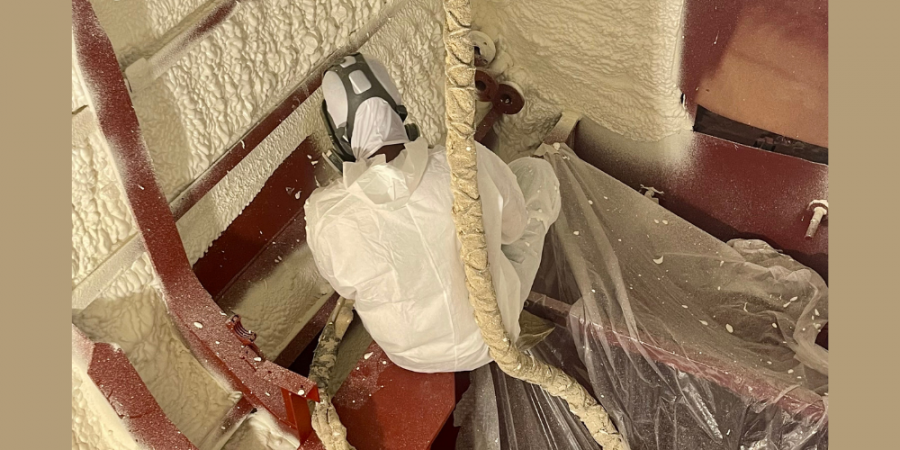
The lodges and the turn house alike had huge openings in the walls where stunning windows would soon go. Before foaming, the helpers set up scaffolding and masked the openings and exposed wooden beams with plastic. For the sake of breathability and extra protection, they also hung some of the mesh netting material commonly used during blow-in fiberglass installs. This served as an added layer to catch overspray while allowing for plenty of airflow while Rucker worked. They also secured plastic to the floors using spare boards to weigh it down.
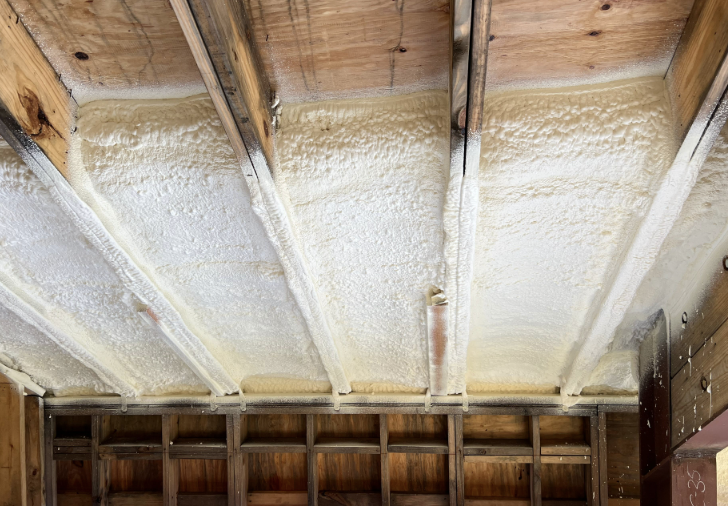
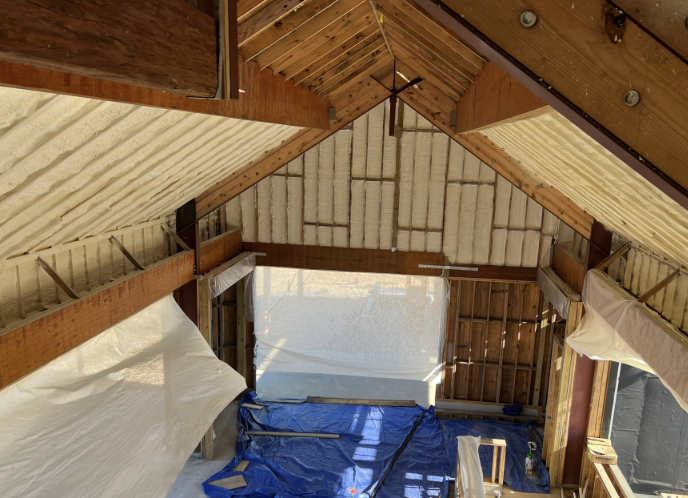
The roof deck received seven and a quarter inches of Natural Polymers HFO 2.0 closed- cell spray foam. The foam cured fast, saving Rucker time between passes.
Foaming: Par For the Course
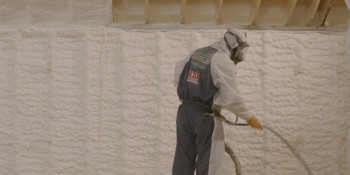
With the masking and prep work finished, it was time to tee off. Rucker suited up in a Moonsuit and 3M respirator. He then installed seven and a quarter inches of Natural Polymers HFO 2.0 closed-cell foam to each of the building’s roof decks, from the top plate to the gable ends.
Because the job called for a thick layer of foam, Rucker went with Natural Polymers foam. He knew from experience the product would enable him to work quickly, since it requires so little downtime between passes.
“One of the reasons we went with Natural Polymers is because there’s less of a cool down time for your second pass. It’s only 10 to 15 minutes, where other foams are 25 or 30,” he explained. “We’d do the first pass at two inches, then go down the whole row. By the time the row was finished, I could start over with the second pass because the first had had plenty of time to cool down.” The Natural Polymers foam made an excellent addition to the resort’s building envelope and was sure to stand the test of time.
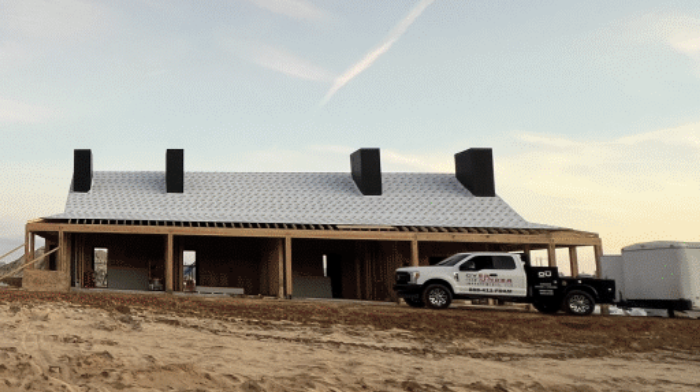
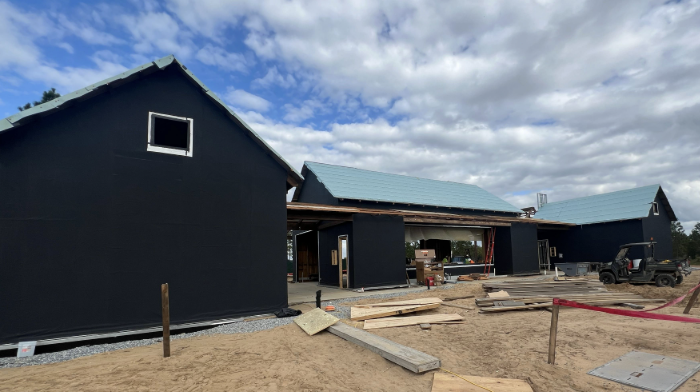
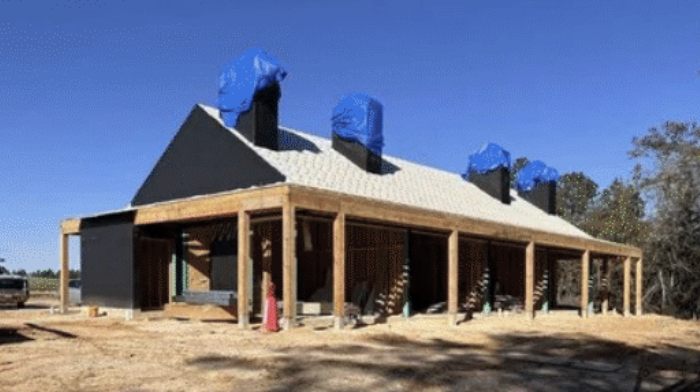
The roof indifferent phases of installation.This in-progress turn house got the same insulation treatment as the golfer’s lodges; a combo of closed-cell spray foam as a building envelope, plus Rockwool and fiberglass batting for sound attenuation.
For Rucker, the biggest challenge was the logistics of moving between the buildings and their many sections. Not only were they essentially spraying every building three times to get the foam to the desired thickness, they also had to build their scaffolding high enough to reach the roof deck. Each lodge was divided into four sectional condos, and each condo had its own mechanical attic they’d need to foam.
As such, the Over Under Foam team had to assemble the scaffolding to reach the attics about 30 feet up, disassemble it to move into another section. After finishing the foam installation, Rucker returned to the resort several times to layer the exterior walls with Rockwool. As well as installing fiberglass batts to all of the interior walls.
Finishing Up: Par-tee Time
Rucker began the project with the golfer’s lodge and attached condos, working through the lodges in phases, section by section, before moving on to the turn house and completing the full scope of work in December 2025.
After Rucker finished foaming, the other trades could then come install the remainder of the electrical system. The GC finished the buildings by adding false ceilings to leave space for mechanical attic access. Patrons to the resort will never know the foam is up there working overtime to keep Georgia’s muggy outside climate at bay, but that’s by design. If clients are ever thinking about their insulation system after the fact, it’s probably because it’s failing. The best foam installers, like Rucker, treat foam as the building’s unsung hero– they come in with no fanfare, do the job the right way the first time, then ride off into the sunset knowing that the results will speak for themselves, year after year.
Disqus website name not provided.