






Foam Over Failure

Spray Foam Magazine – Late Summer 2026 – Imagine slashing a building’s energy bills, stopping leaks in their tracks, and giving an old roof a second life, all without the hassle or cost of a full replacement. In this exclusive Spray Foam Magazine interview, discover how the passion and methods of one roofing contractor are helping redefine traditional commercial roof renovations. If a commercial roof is in good shape except for a contained area, it makes sense to repair it. That’s why it’s important to consult experts to avoid costly mistakes.
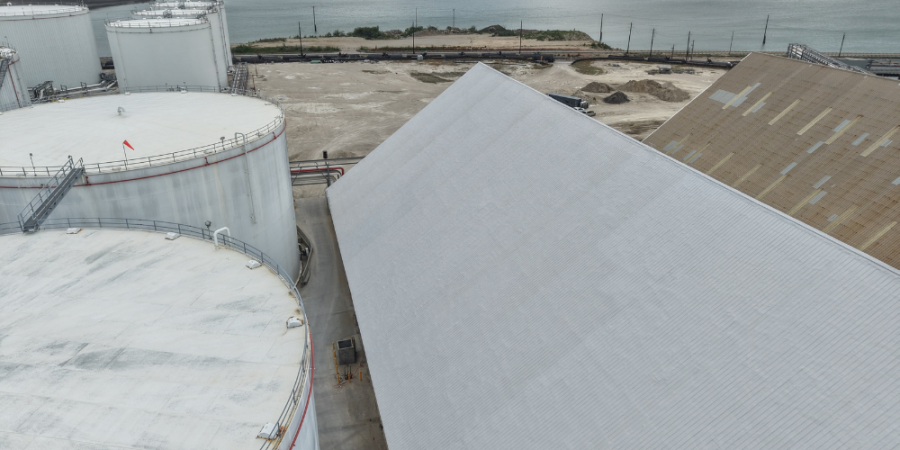
This project took place in Galveston, Texas, at the Texas International Terminals, a large industrial storage facility. The decision to restore the roof came from the owner, the architect, and Trident Commercial Roofing’s recommendation after their inspection. Finding the root of the problem is important for any commercial roof, whether it’s metal, flat, or pitched. If the roof still has plenty of life left, the problem is usually limited to one area and doesn’t affect the whole roof.
Fixing just that area costs much less than replacing everything. Issues might include cracked tiles, failed flashing, or damage to part of the membrane. It’s also important to check the roof’s history to make sure these problems don’t keep happening. If they do, a closer inspection is needed before making any decisions. Through their inspection of this roof, Trident found that using spray foam with coatings would be the most cost-effective and long-lasting solution.
The roof had ongoing leaks and other issues common in older metal systems. SPF was chosen because it creates a seamless, fully attached layer that stops leaks, adds insulation, and prevents future problems with fasteners. Most of the leaks were found at seams, penetrations, skylights, and fasteners. Trident planned to seal penetrations and seams, replace the skylights with metal, and reinforce key areas before applying the foam to 108,000 sq. ft. of pitched metal roofing and 15,000 sq. ft. of exterior walls.
The talented Trident crew included Jonathan and Rudy Byler as project leads, Ivan Shetler as the head spray foam sprayer, and crew members Kenny Shetler and Marvin Miller.
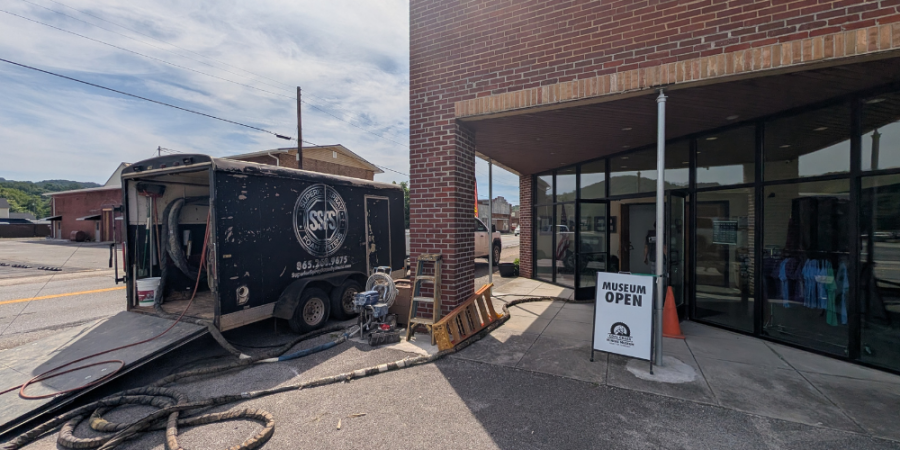
The head coating sprayers were Albert Brenneman and Jonathan Byler, with William and Wayne Mullet on the coating team. The crew arrived at the site with their rig, which carried all the necessary spray foam equipment: heated hoses, a spray foam gun, a Graco Fusion PC, PolyCon 2800 HFO closed-cell foam, a PMC PH-40 proportioner, Graco 833 pumps, and a Titan M-8 spray gun.
After arriving, the crew put on their safety gear, including harnesses, respirators, protective suits and gloves, eye protection, hard hats, and flame-resistant suits. They set up equipment and ran hoses, then started prepping the roof. This included cleaning and pressure washing, removing contaminants and loose materials, sealing seams and penetrations, and applying primer and sealant where needed.
Next, the crew installed the PolyCon foam. They had to consider the coastal location, which meant dealing with changing weather, humidity, and dew. The risk of overspray due to high winds were also concerns. Because this was a large project, the team stayed alert and coordinated their work, adjusting timing and methods to keep quality high.
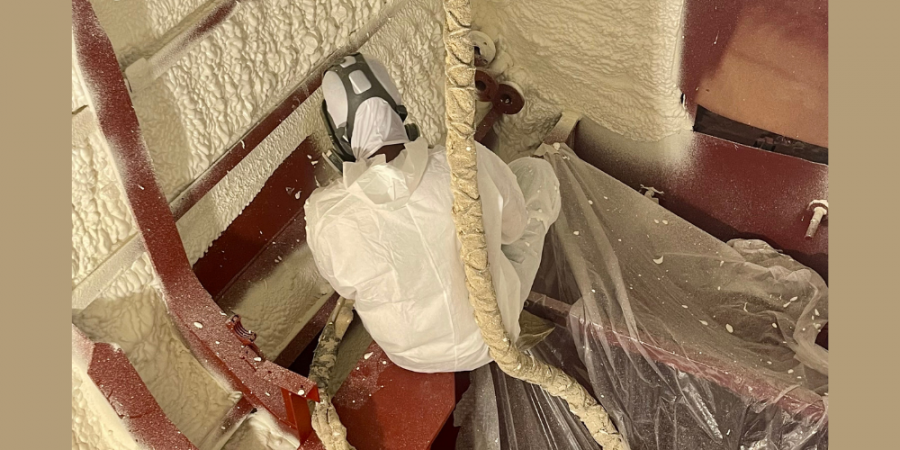
They used PolyCon 2800 HFO closed-cell foam for its high-yield, durability, and strong grip on metal. The crew worked in sections, spraying an average of one and a half inches directly over the metal roof. They used 55 sets of foam to cover the entire area.
After the foam, the Trident crew applied an acrylic topcoat. Acrylic coatings are popular for commercial roofs because they improve both appearance and durability. The lifespan of the coating depends on its quality, the roof surface, how well it’s applied, the environment, and regular maintenance.
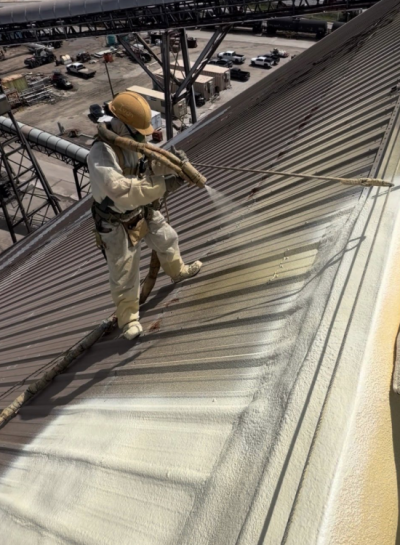
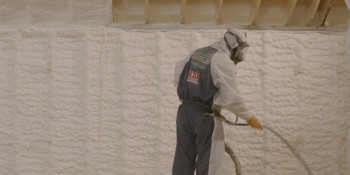
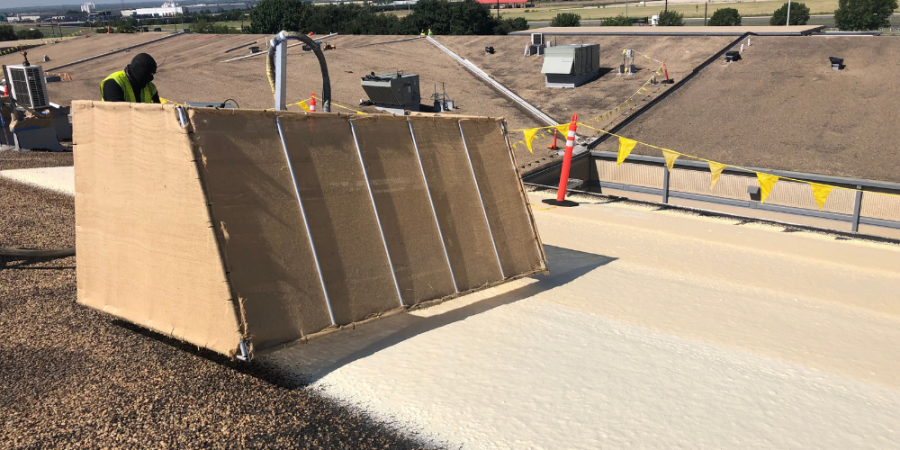
Applying PolyCon 2800 HFO closed-cell foam at approximately 1.5 inches, following a flash pass over the holes.
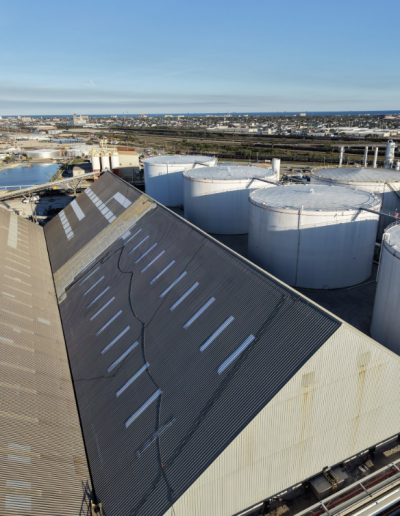
Overview of the roof application starting near the center of the building. Limited hose reach and tight site conditions required spraying from both gable ends.
The coating helps protect the roof from water, UV rays, and everyday wear. Acrylic coatings are flexible, so they expand and contract without cracking. This makes them a great choice for Texas and coastal areas, where temperatures can change a lot.
The crew started with a 13.5-mil basecoat and reinforcement, then applied Puma XL/Benchmark, a high-performance acrylic coating system, at 13.5 mils for extra durability and UV protection.
This coastal project lasted eight weeks and was unique due to its size and location. The well-trained crew had to constantly monitor moisture and weather in the area to make sure the application was completed properly. They handled the entire job with professionalism and a positive attitude.
Jonathan Byler, Trident’s roof restoration specialist, says, “Projects like this show why restoration is the future of commercial roofing. Instead of tearing off and replacing, we can restore, reinforce, and extend the life of these roofs. The system performs better and costs less in the long run. Our goal is to do it right the first time, so the building owner doesn’t have to deal with it again.”
Trident Commercial Roofing takes pride in providing reliable, durable, and cost-effective roofing solutions. “Client satisfaction has been excellent. The building now has a seamless, energy-efficient roofing system designed to last for decades,” concludes Byler.
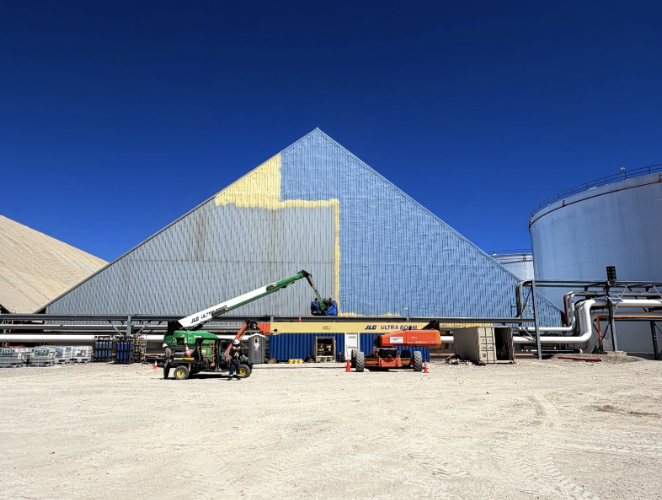
Applying two coats of Conklin Benchmark Base Coat immediately after the spray foam installation to protect the foam from UV exposure and achieve proper coverage.
Disqus website name not provided.