












Hue Knew


Spray Foam Magazine – Winter 2025 – Hey fellow foam contractors! If you’ve ever worked on a project north of the border or seen photos from Canadian job sites, you’ve probably noticed something different about our spray foam—it comes in colours (yes, this word has a U).
It’s not just one standard off-white or yellow, but purple, green, blue, amber, and more. While this might seem like a novelty to our American friends, there’s actually a serious regulatory reason behind our rainbow of foam colours.
Why We Colour Code
Back in 2001, Canada introduced the CAN/ULC S705.1 Standard for medium-density spray polyurethane foam. This wasn’t just another bureaucratic hurdle—it was a response to quality control issues and the need for better accountability in our industry. The standard requires that spray foam products be “easily and uniquely identified on the job site.”
The simplest solution? Colour coding.
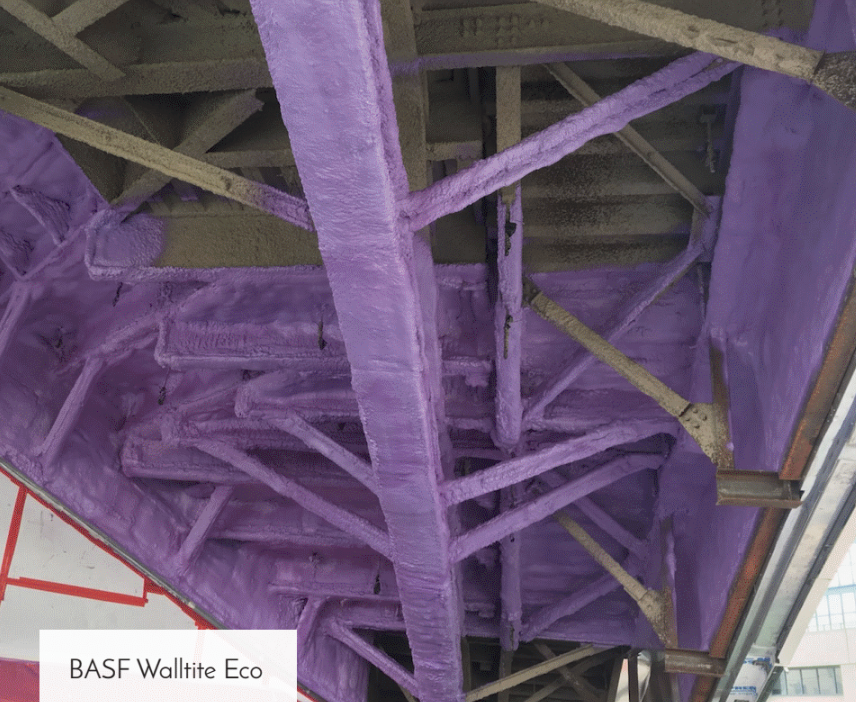
Think about it from a building inspector’s perspective. They show up to a job site where the permit specifies BASF Walltite, but how do they know that’s actually what got sprayed? In the old days, it was basically an honor system. Now, if they see purple foam, they know immediately it’s Walltite. No purple? Something’s not right.
The Current Colour Spectrum
After years of working with these products and training new installers, here’s the definitive list of colours you’ll encounter on Canadian job sites (though manufacturers do occasionally update their formulations, so always check the current Technical Data Sheets):
The Big Players:
BASF Walltite – That unmistakable purple
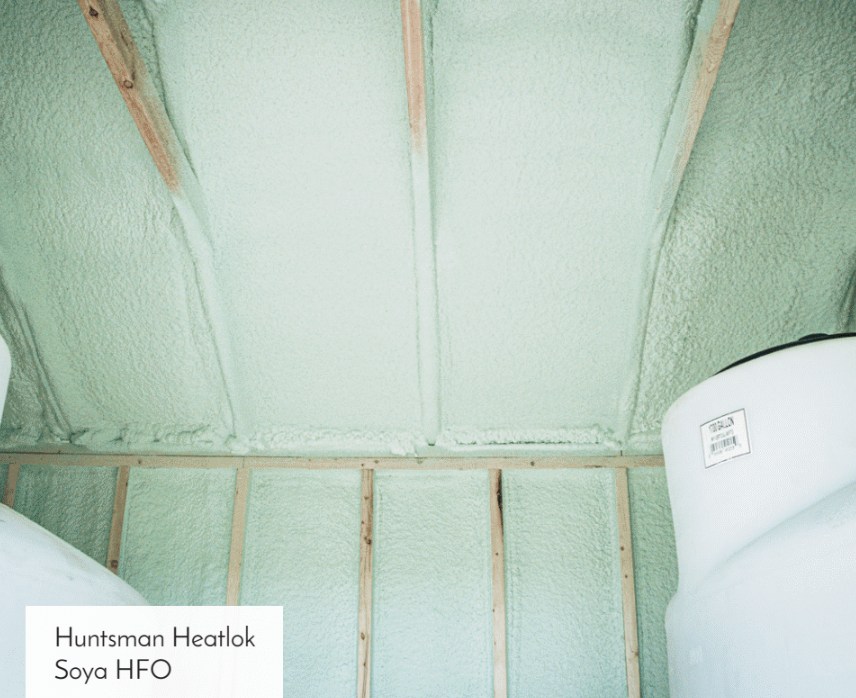
Huntsman/Demilec Heatlok Soya HFO – Traditional green (and yes, we know there are too many greens!)
Johns Manville Corbond IV Canada – Grey, stands out nicely against wood framing
Elastochem Insulthane Extreme – Sierra Red, though honestly it looks more pinkish-brown in real life
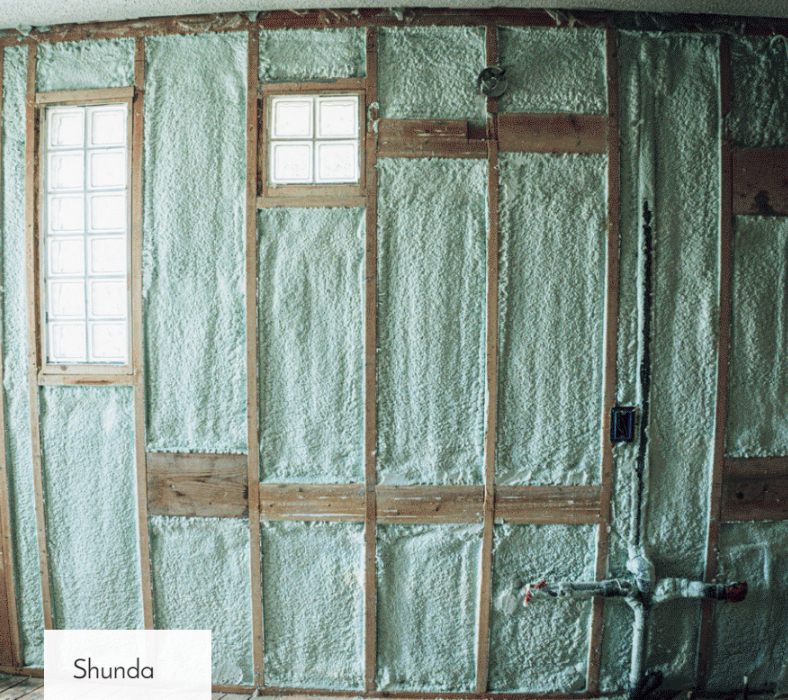
Shunda ComfortLock HFO – Sky blue, one of the newer players making a market
The Green Brigade (this is where it gets confusing):
Gaco/Enverge 1860 CDN – Light green
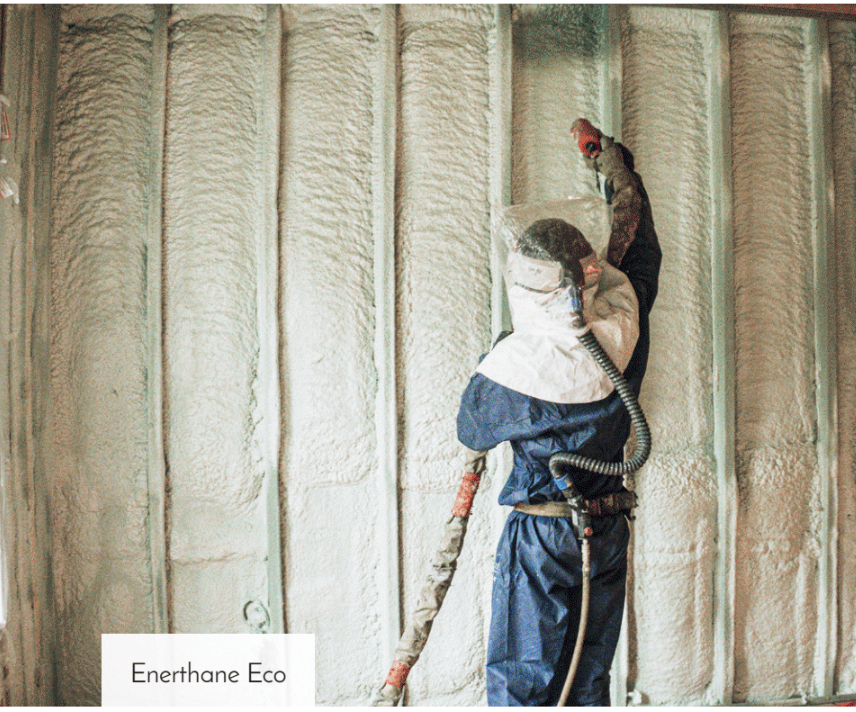
Enerthane Eco – Light green with a teal tint
Demilec Airmetic – Also green, similar to Heatlok
Others:
Carlisle SealTite ONE – Blue (different shade than Shunda)
CUSE Grizzly Gold – Amber
Now, I’ll be honest – this isn’t a complete list. SOPREMA and SWD have products out there too, and new formulations are always coming to market. But these are the ones you’ll see on 90% of Canadian commercial and residential jobs.
Why This System Works (Most of the Time)
The colour system has saved our Canadian bacon more than once. I’ve had situations where a new guy grabbed the wrong set of drums, and we caught it immediately because the colour was off. Try explaining to a homeowner why their basement needs to be completely re-done because the wrong product was installed—colour coding prevents those nightmares.
Building officials love it too. They can do a quick visual check without waiting for documentation. It’s also harder for fly-by-night contractors to substitute cheaper, non-compliant products.
The challenge? When you’ve got three manufacturers all using slight variations of green, even experienced inspectors need to double-check the paperwork. We joke that we need a Pantone colour chart for spray foam, but honestly, it’s not far from the truth.
Looking Forward
As more U.S. states adopt stricter building codes and embrace the HFO transition, don’t be surprised if you start seeing similar requirements south of the 49th parallel. The Canadian system isn’t perfect, but it adds a layer of accountability that benefits everyone—contractors, inspectors, and ultimately, homeowners.
So next time you see photos of purple or green foam from a Canadian job site, you’ll know it’s not just for show. It’s our industry’s way of keeping everyone honest and ensuring quality installations that meet our rigorous standards.

Disqus website name not provided.